
Reps. Kishman, Miller Announce ELDER Act
House Bill 648 establishes clear, uniform standards for crypto kiosks to help prevent scams
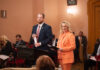
COLUMBUS, Ohio – State Representatives Matthew Kishman (R-Minerva) and Melanie Miller (R-Ashland) today announced the introduction of House Bill 648, also known as the ELDER (Ending Losses and Deception in Electronic Resources) Act.
The ELDER Act aims to provide clear and uniform standards for the use of virtual currency kiosks – also known as Bitcoin ATMs – which can lead to cases of fraud, predatory practices, and misuse, particularly for older Ohioans and vulnerable populations. Crypto kiosks can be found in public places such as grocery stores, gas stations and retail stores as a legitimate way to buy or sell crypto currency. However, there has been a significant rise in crypto ATM scams around the country in recent years, which particularly target older Americans.
“These scams are despicable – destructive to society. I’ve seen countless videos and reports of our elderly being coerced into putting tens of thousands of dollars into these machines in just a few minutes. After that, in most cases, it’s just gone. It’s just intolerable. You have unscrupulous foreign fraudsters circling like vultures over the American people every day. We’re taking steps to stop it,” said Kishman.
House Bill 648 requires virtual currency kiosk operators to be licensed as money transmitters, subject to the same financial oversight and solvency requirements that already apply to other entities handling consumer funds.
“Too many Ohioans are being targeted by criminals who exploit confusion around cryptocurrency and new technology,” said Miller. “By establishing clear rules and accountability for crypto kiosk operators, we are giving Ohioans confidence that these services can operate fairly, transparently, and safely.”
The bill works to establish clear disclosure and reporting obligations, including:
Mandatory risk warnings, alerting customers that transactions are irreversible, highly volatile, and not backed by government protections.
Transparent fee disclosures to prevent excessive charges.
Transaction limits to reduce the potential for fraud and large-scale scams, with lower daily limits for new customers and higher limits for established customers.
Receipt requirements, ensuring customers receive a detailed record of each transaction.
Refund rights for new customers who are victims of fraud, provided they report promptly to law enforcement.
The legislation also implements important anti-fraud safeguards, such as:
Mandatory telephone verification for large or high-risk transactions, and for new customers over the age of 60.
Use of blockchain analysis to detect and block transactions linked to high-risk or sanctioned wallets.
Appointment of a full-time compliance officer by each kiosk operator.
These provisions are designed to strike a careful balance between ensuring that Ohioans can continue to access and use digital assets if they choose, while creating strong protections against fraud, abuse, and financial harm.
The bill has received early support from AARP Ohio.
“Cryptocurrency kiosks are increasingly being used to target Ohio consumers, particularly older adults, through sophisticated scams. This legislation adds critical guardrails—such as limits on withdrawals—that can stop fraud in its tracks and protect people’s hard-earned savings. AARP Ohio appreciates the leadership of Representative Kishman and Representative Miller who are taking meaningful action to put consumer safety first,” said Jenny Carlson, State Director, AARP Ohio.
To date, 18 other states have taken action in an effort to strengthen consumer safety, enhance transparency, and level the playing field for legitimate businesses.
H.B. 648 has been introduced in the Ohio House and has been assigned to the House Financial Institutions Committee for further consideration.