
Trooper James R. Gross — In Remembrance
30 Years Later: A Fallen Trooper, A Changed Profession, A Legacy That Endures
ASHLAND COUNTY, OHIO — In the early morning hours of January 19, 1996, a routine traffic stop along Interstate 71 northbound at milepost 190, just north of U.S. 250, forever changed Ohio law enforcement and left a lasting scar on the Ashland County community.
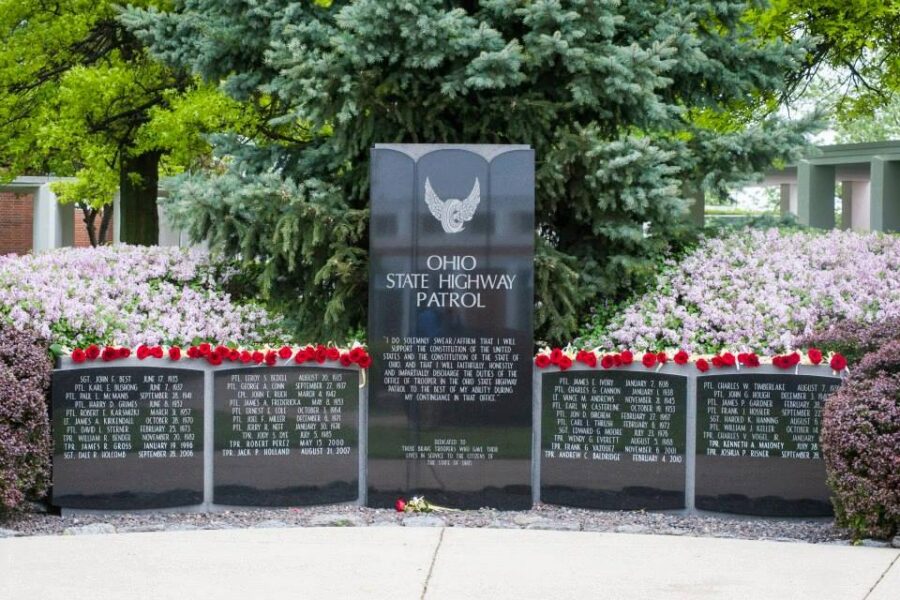
At approximately 3:15 a.m., Ohio State Highway Patrol Trooper James R. Gross, just 27 years old, was shot and killed in the line of duty. Three decades later, his sacrifice continues to shape officer safety practices across Ohio—and his memory remains deeply woven into the fabric of Ashland County.
A Trooper Answering the Call
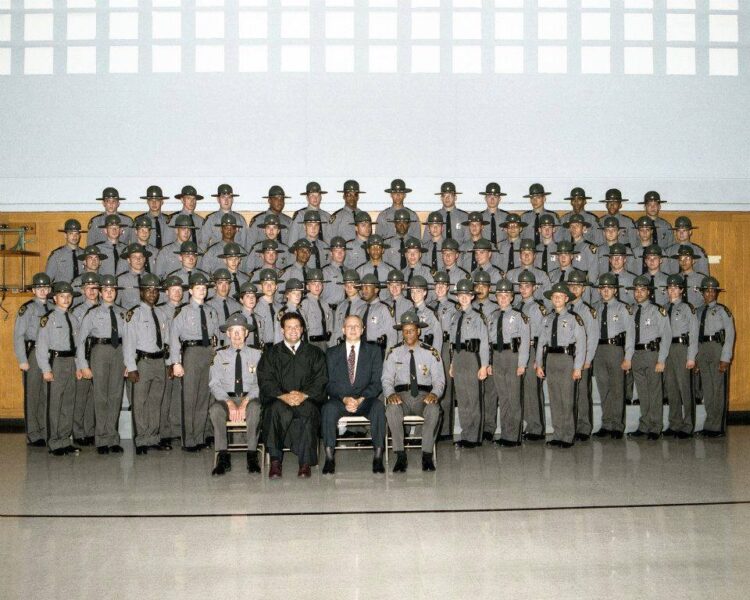
Trooper James R. Gross was a graduate of the 124th Ohio State Highway Patrol Academy Class, graduating on June 25, 1993. He had served just over two years with the Patrol at the time of his death, assigned to the Ashland Post and working the midnight shift under Sergeant Tim Dreisbach.
On the night of January 18–19, 1996, Trooper Gross was temporarily at the Ashland Post, giving the dispatcher a break, when he overheard CB radio traffic from commercial truck drivers reporting a possible drunk driver traveling northbound on I-71 near the Ashland exit.
Believing he was responding to a routine impaired-driving complaint, Trooper Gross immediately left the post and—with the help of truck drivers relaying information over CB radio—located the suspect vehicle.
What Trooper Gross did not know was that the driver was already the subject of a violent incident hours earlier in Reynoldsburg, Ohio.
Events Leading Up to the Shooting
According to Doug Miller, former Lieutenant with the Ohio State Highway Patrol, the suspect, Maxwell D. White Jr., 30, of 7635 Coronado Blvd., Reynoldsburg, had advised his mother around 5 p.m. on January 18 that he was not going to work. White was employed at the Kroger warehouse in Columbus.
White returned home around midnight, intoxicated, sparking a loud and prolonged argument. His mother—aware of his prior conviction for carrying a concealed weapon and the fact that he was still on probation—feared neighbors would call police. She also knew White harbored deep anger toward law enforcement, believing he had been harassed in the past.
When White learned his mother had contacted his sister, Dorothy, he became enraged, destroying items inside the home. Despite knowing he was legally prohibited from possessing a firearm, White retrieved a handgun from a cabinet.
When his sister arrived, White forced both women downstairs at gunpoint and tied them up. During the chaos, he accidentally shot his mother in the right ankle/foot.
Before leaving the house, White reportedly stated:
“I am not going back to jail. It would be better going to the morgue.”
After White fled, his mother and sister freed themselves and contacted the Reynoldsburg Police Department. Law enforcement agencies throughout central Ohio were alerted, but White’s destination was unknown.
The Fatal Traffic Stop
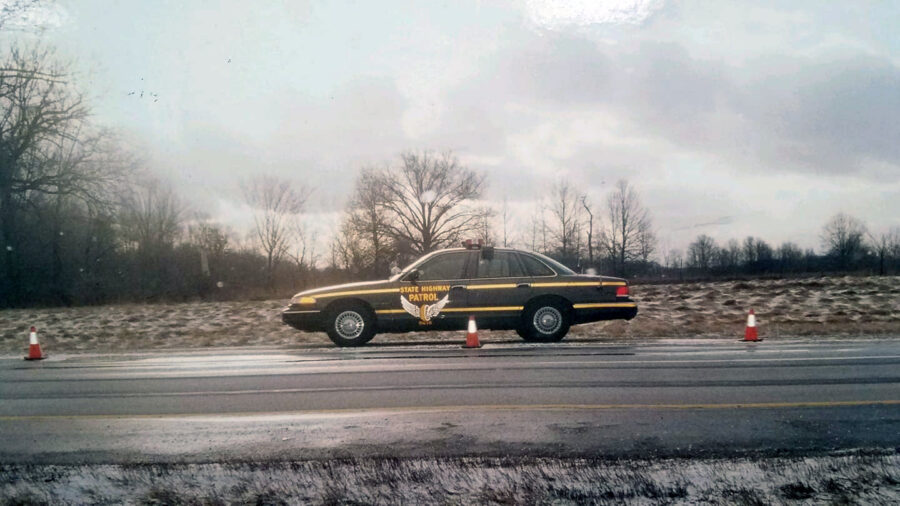
At approximately 3:00 a.m., Trooper Gross initiated a traffic stop on I-71 northbound at milepost 190.
As Trooper Gross approached the driver’s side of the vehicle, it remains unclear whether the window malfunctioned, the driver opened the door on his own, or Trooper Gross instructed him to do so. A witness stated the driver opened the door.
Standing just feet away, Trooper Gross apparently observed the firearm. As he turned to move away, White fired a single round from a .45-caliber Smith & Wesson handgun.
The bullet struck Trooper Gross in the left elbow, traveled down his arm, and exited near his wrist. The projectile was later found lodged in the lining of his jacket. Being left-handed, Trooper Gross was suddenly unable to use his weapon.
He retreated, and a witness later recounted:
“Trooper Gross slipped and fell, got back up, and began running toward his patrol car, bent forward—when we heard two more shots.”
One of those rounds struck Trooper Gross just above the beltline, below his soft body armor. According to the coroner’s report, the bullet traveled upward and severed his aortic arch, likely killing him instantly.
Trooper Gross collapsed at the rear of his patrol car. White fled northbound on I-71.
Pursuit, Capture, and Conviction
Multiple commercial drivers witnessed the shooting and immediately relayed details over CB radio. Highway Patrol units located White’s vehicle, initiating a 29-mile high-speed pursuit.
White crashed while attempting to exit at State Route 18 in Medina County and was taken into custody without further incident.
White was later convicted of capital murder in Ashland County Common Pleas Court and sentenced to death. In December 2005, the U.S. Sixth Circuit Court of Appeals vacated the death sentence, citing juror misconduct, and ordered resentencing.
White remains incarcerated at the Ohio State Penitentiary in Youngstown, with no eligibility for parole until at least age 81.

The Life Behind the Badge
James Robert Gross was born January 12, 1969, to Robert and Barbara Gross. He graduated from Brunswick High School in 1987, then earned an associate degree in criminal justice from the University of Akron in 1991.
While working as a restaurant manager to support himself through college, he met Veronica Watson. The two married on August 21, 1993, just two months after Trooper Gross graduated from the academy.
He served at the Mt. Gilead Post before transferring to Ashland, allowing him to be closer to home.
Retired Sergeant Dale LaRue, a close friend and coworker, recalled:
“While at Ashland, he worked on my shift much of the time. It was there that he investigated his first fatal crash.”
After Trooper Gross’ death, LaRue and Lt. Bob Ferguson discovered six copies of that fatal crash report carefully kept in Gross’ locker—mementos of a young trooper who took his duty seriously.
A Death That Changed Policing
Trooper Gross’ death directly led to the creation of the COP (Caution Ohio Police) Initiative, an early-warning system within LEADS designed to alert officers of potentially dangerous individuals—even before warrants could be entered.
According to A History of the Ohio State Highway Patrol, the initiative was launched in summer 1996 to prevent officers from unknowingly walking into deadly situations.
Ashland Police Chief Todd Marcelli reflected:
“Trooper Gross’s death had a profound effect on everyone at the Ashland Police Division. COP bulletins became part of every shift. Training tactics changed—and those changes have probably saved lives.”
The Memorial Along I-71
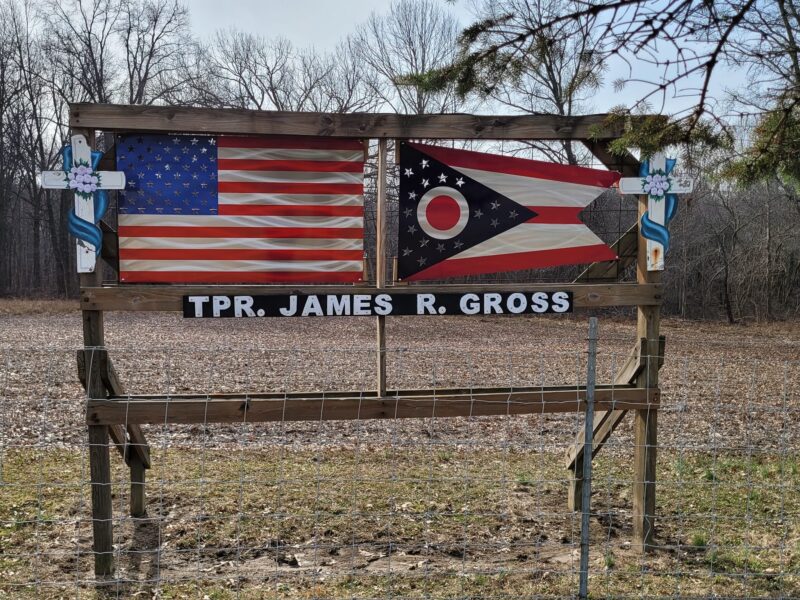
What began as a simple American flag along the right-of-way fence evolved into the permanent memorial many motorists see today.
Sergeant LaRue explained that due to highway widening, a local property owner granted permission to place the memorial outside the right-of-way—a quiet tribute from the community.
A pine tree at the site was donated by Simcak’s Spruce Farm, whose owner had once coached Gross in softball.
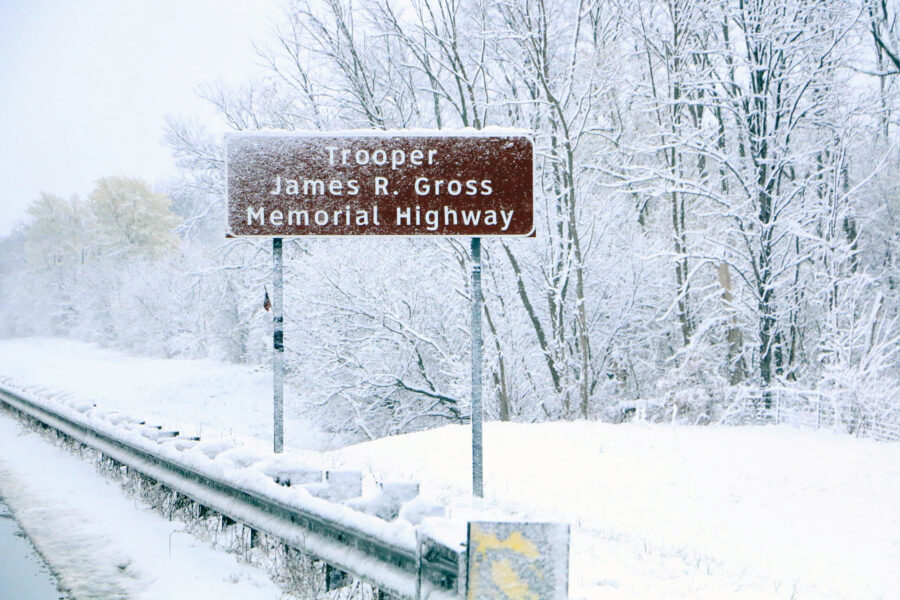
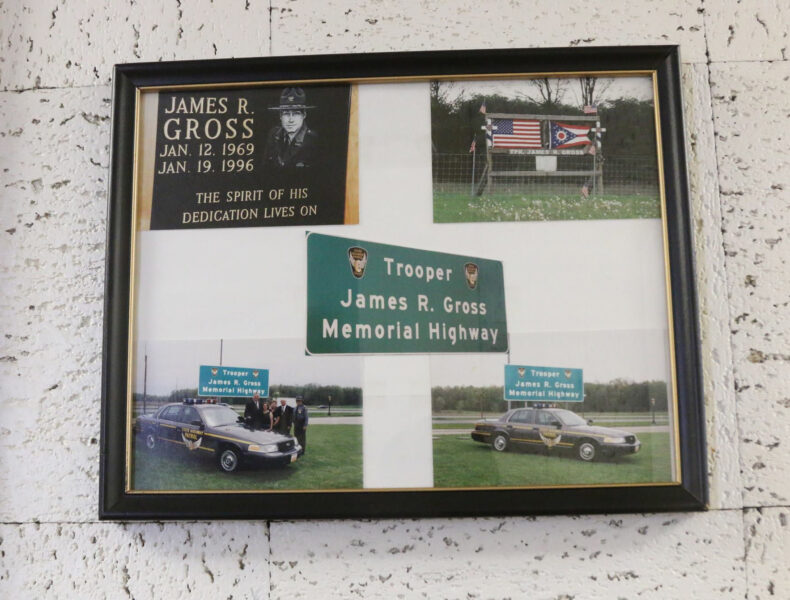
On February 12, 2002, Governor Bob Taft signed legislation designating a portion of I-71 as the “Trooper James R. Gross Memorial Highway.”
Never Forgotten
Every year, on January 19, the Ashland Post of the Ohio State Highway Patrol observes a moment of silence.
As retired Sgt. LaRue stated:
“With Jim’s death coming just after the one-year anniversary of Lt. John Gisclon’s death, the entire community was deeply stricken.”
Trooper Gross was the 33rd Ohio State Trooper killed in the line of duty—and the third killed by gunfire.
His sacrifice continues to echo through generations of law enforcement officers who learn his name, visit his memorial, and understand the cost of wearing the badge.
God bless the Gross family.
Rest in peace, Trooper James R. Gross.
You will never be forgotten.
Acknowledgments:
Ashland Post – Ohio State Highway Patrol
Ashland Police Division
Ashland County Sheriff’s Office
Retired Sgt. Dale L. LaRue
Lt. Raymond C. Durant
Doug Miller, former OSHP Lieutenant
Originally published in 2018.