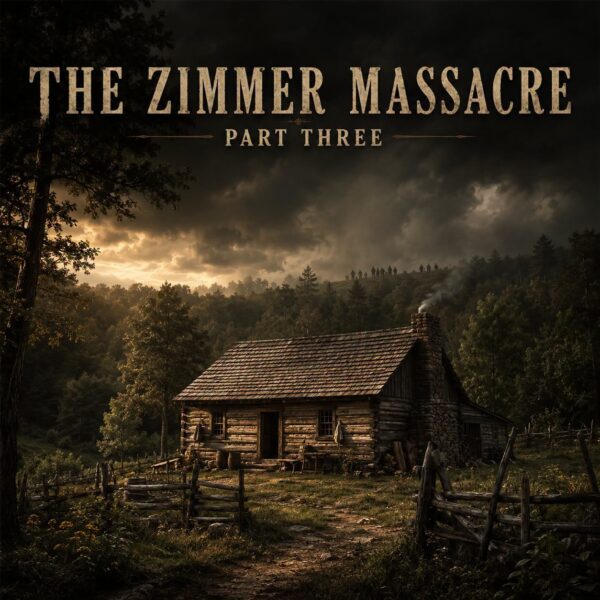

The Zimmer Massacre: When the War of 1812 Brought Bloodshed to Ashland County
Part Three of a local history series
By Kenneth Hammontree
ASHLAND COUNTY, Ohio — A dinner table remained set, the food untouched.
Inside and around an isolated cabin in Mifflin Township, four settlers lay dead following one of the darkest episodes in the early history of what would become Ashland County.
The Zimmer Massacre occurred on Sept. 10, 1812, just days before the nearby Copus Massacre, and brought the violence of the War of 1812 directly into the homes of frontier families.
Frederick Zimmer, his wife, their daughter Catherine “Kate” Zimmer and neighboring settler Martin Ruffner were killed by a Native American war party that historical accounts describe as including Delaware, Shawnee, Mingo and Mohawk warriors.
The attack unfolded amid escalating fear, anger and bloodshed following the forced removal of Native American residents from Greentown and the destruction of their village by American forces.
The previous installment of this series examined the forced removal of Indigenous people from Greentown and Jeromesville and the violence that followed across the region.
By September 1812, relations between settlers and Native American tribes had deteriorated dramatically. The United States was at war with Great Britain, and several tribes had allied themselves with the British in hopes of stopping American expansion onto their lands.
The defeat of Shawnee leader Tecumseh and his brother Tenskwatawa at Prophetstown in 1811 also contributed to the growing pan-tribal resistance.
British forces provided allied tribes with weapons, ammunition, food and other provisions. Native war parties, meanwhile, struck isolated American settlements, disrupted militia movements and spread fear throughout the frontier.
Ashland and Richland counties were especially vulnerable. Settlers lived in scattered cabins surrounded by dense forest, often miles from their nearest neighbors. Firearms and ammunition were limited, organized protection was scarce and assistance could be hours away.
Ohio Gov. Return J. Meigs Jr. attempted to strengthen the frontier by mobilizing militia units and ordering the construction of blockhouses throughout the wilderness.
For the Zimmer family, however, protection would not arrive in time.
Frederick Zimmer, whose surname also appears in historical records as Zeimer and Seymour, was born in Germany around 1750. He later established a homestead in Mifflin Township, which was then part of Richland County but is now within Ashland County.
The Zimmer cabin stood on a hill approximately half a mile from the Black Fork of the Mohican River and about two miles from the nearest neighboring home.
Zimmer embodied the self-reliant spirit required of frontier settlers. His wife, whose first name does not appear in surviving accounts, helped maintain the household, garden and daily work necessary for the family’s survival.
Their daughter, Catherine, commonly called Kate, also worked on the family farm. According to a story passed through the Smith family for generations, Kate was engaged to marry Jedediah Smith the following spring after the two were introduced by John Chapman, better known as Johnny Appleseed.
Like many stories carried through families for generations, that account is difficult to confirm.
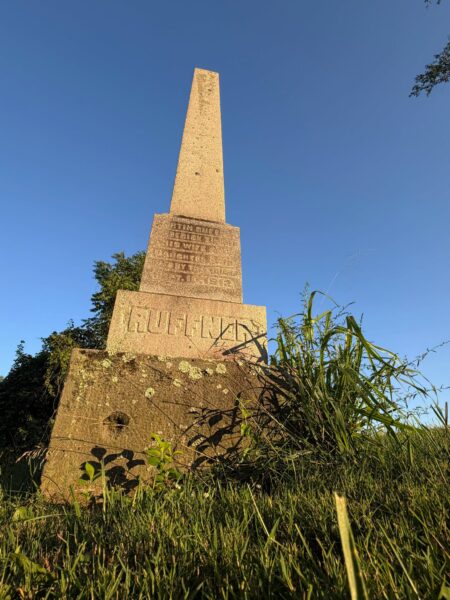
Martin Ruffner lived on a nearby farm and came to check on the Zimmer homestead on the day of the attack. Local accounts described Ruffner as an outspoken opponent of Native Americans, particularly members of the Delaware tribe, after some of his relatives had reportedly been killed.
A warning before the attack
Earlier on Sept. 10, several Native American warriors reportedly asked Ruffner’s bound servant, Levi Berkinbizer, where the Zimmer cabin was located and whether the family would be home that day.
Some neighbors later claimed members of the war party had visited the ruins of Greentown the previous day and emerged filled with anger over the village’s destruction.
Suspecting an attack, Ruffner sent Frederick Zimmer’s 19-year-old son, Philip, to seek help from nearby settlers. Ruffner then armed himself and hurried toward the Zimmer cabin.
He arrived as the attack was beginning.
Inside, Frederick Zimmer, his wife and Kate had apparently been preparing to eat. The dinner table was set, but the meal would never be touched.
According to historical accounts, Ruffner attempted to fight back. His rifle was later found bent, suggesting he had used it as a club during the struggle.
Ruffner was reportedly shot twice before being overpowered outside the cabin. A tomahawk blow severed several of his fingers.
Frederick Zimmer, his wife, Kate and Ruffner were all killed. Their bodies were scalped and mutilated, a tactic intended not only to kill but also to spread terror throughout the surrounding settlements.
The warriors departed without taking the food from the table or extensively looting the cabin, supporting the belief that revenge, rather than theft, was the primary motive.
A silent cabin at twilight
Philip Zimmer returned to the homestead around twilight with the Rev. James Copus and settler John Lambright.
They found the cabin dark and silent.
Copus cautiously walked around the structure and attempted to look through a rear window. Hearing nothing, he approached the front entrance. The door appeared to be wedged shut, and blood could be seen when it was partially opened.
Fearing the attackers might still be nearby, or possibly inside, the men withdrew without conducting a complete search.
Their immediate concern turned to protecting their own families.
The settlers gathered their loved ones and traveled to the cabin of David Hill, located near where the village of Lucas stands today. There, they remained on watch throughout the night.
Philip Zimmer and the other men returned the following morning and confirmed the deaths. The four victims were buried together in a common grave near the cabin.
Suspects reportedly confessed
Historical accounts state that three members of the war party were arrested several weeks after the killings and confessed to participating in the massacre.
A Delaware man identified as Kanotche was reportedly the leader of the group, which was believed to include approximately 10 to 12 warriors. Kanotche allegedly admitted killing Kate Zimmer.
The three prisoners narrowly escaped being lynched by members of the militia. They were ultimately treated as prisoners of war and exchanged, a decision that further intensified fear and anger among frontier settlers.
News of the massacre reached military authorities at the Mansfield Blockhouse. The small militia force stationed there did not immediately pursue the attackers because officials did not know the size of the war party or whether additional warriors were nearby.
Families quickly abandoned isolated homesteads and sought protection inside blockhouses throughout Ashland and Richland counties.
Among those seeking safety was the family of the Rev. James Copus.
Their fears would soon prove justified.
Another massacre five days later
The Zimmer Massacre occurred only five days before the Copus Massacre of Sept. 15, 1812.
Both attacks demonstrated the vulnerability of settlers living in isolated cabins and reflected the broader struggle over American expansion, Native hunting grounds and control of the Ohio frontier.
The attacks were swift and terrifying, leaving communities unsure where the next strike might occur.
The War of 1812 was no longer a distant conflict being fought along the Canadian border or at remote military forts. It had arrived in the forests and fields of Ashland and Richland counties.
Remembering the victims
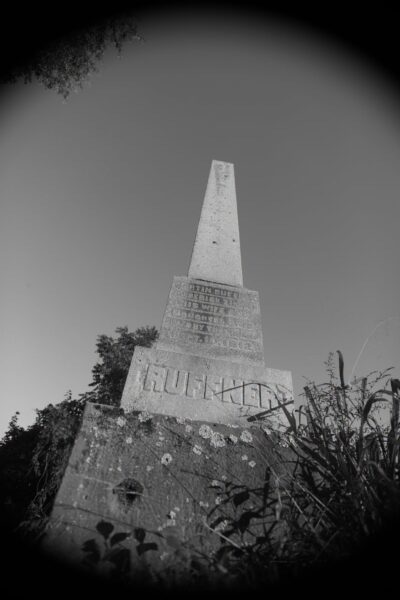
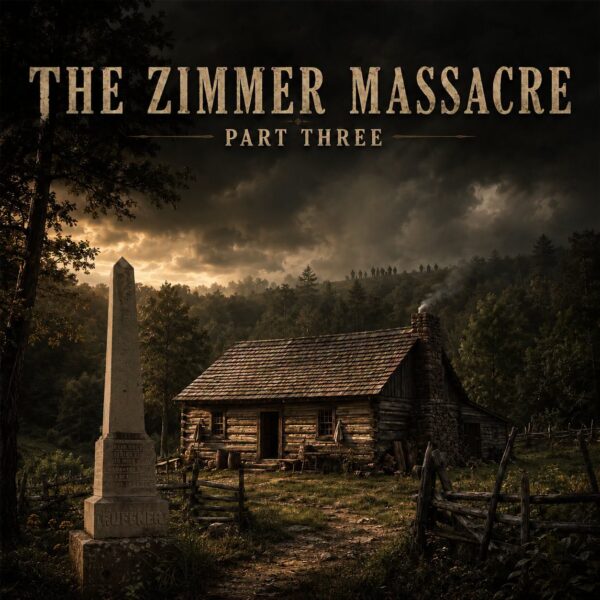
In 1882, monuments were dedicated at the sites of the Zimmer and Copus massacres, located about two miles apart near State Route 603.
An estimated 10,000 people attended the dedication ceremonies, demonstrating how deeply the events remained embedded in the region’s collective memory seven decades later.
The monuments continue to mark the places where the War of 1812 brought fear, violence and death to the local frontier.
The Zimmer Massacre was part of a larger and tragic cycle repeated across the United States as settlers moved westward and Indigenous people were forced from their homelands. Retaliation brought further retaliation, leaving generations marked by bloodshed, mistrust and destruction.
Today, the massacre remains a sobering chapter in Ashland County history, and a reminder of the human cost endured by settlers and Native peoples as two worlds collided on the Ohio frontier.
Reference sources:
Pioneer Life in Richland County by Philip Seymour, published by Brinkerhoff & Day in 1857.
Tales of the Mohican Country by Lee Cavin, published in 1985.
History of Ashland County, Ohio by A.J. Baughman, published by S.J. Clarke Publishing Company in 1909.
History of Ashland County, Ohio by George William Hill, M.D., published in 1880.
A History of Ohio by Eugene H. Roseboom and Francis P. Weisenburger, published by the Ohio Historical Society in 1976.