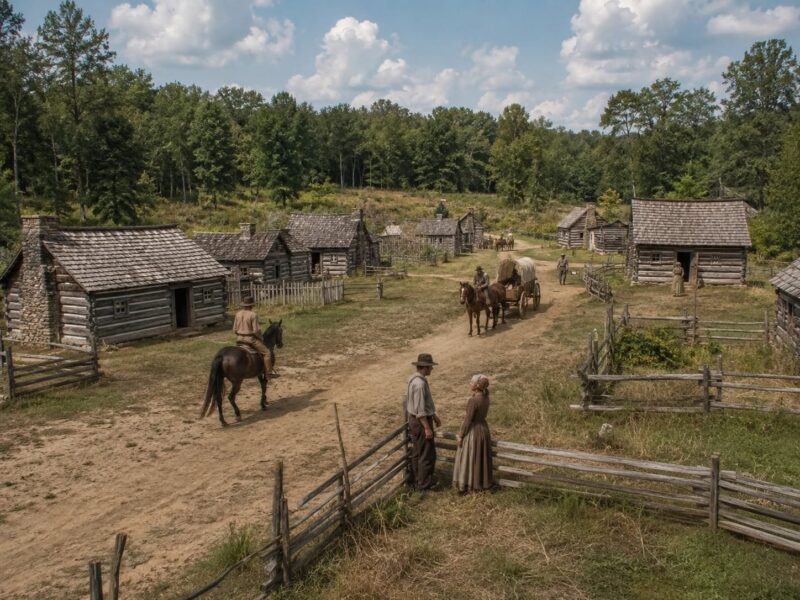

The Removal of the Various Tribes in the Village of Greentown and Jerometown, Ohio, in 1812
By Kenneth Hammontree
In the last several articles about the removal of the Ohio Tribes, we focused on two leading war chiefs, Tecumseh and Blue Jacket, and their fight to hold on to the ancient Tribal lands. In this article we will learn about the removal of the remnants of those various tribes that gathered in Jerometown and Greentown in present day Ashland, County, former Richland County in 1812.
The two settlements were established by the Lenape Delaware Indians and the Frenchman Jean Baptiste Jerome in the late 1780’s. However, as the various tribes were pushed out of Pennsylvania and eastern Ohio, the remnants of these once powerful tribes gathered along the Mohican River settlements.
The great warriors trail, located at ST. RT. 603, in Ashland County, brought remnants of the Iroquois, Senecas, Delawares, Mohawks, Mingos, Shawnees, and Hurons to the two settlements. They felt that there was strength in numbers and with more than 150 dwellings in Greentown alone, they would be safe from the white men and their deceitful ways. As always with the U.S. Government’s relationship with the Indian tribes, their peaceful existence in Greentown and Jerometown would be short lived.
When war was declared with Great Britain in 1812, once again, a feeling of uneasiness ran through the white settlements in the Mansfield area. They were aware the tribes had always been allies of the English, hoping the British would assist them in regaining the lands they had lost to the settlers.
The removal of the tribes from Greentown and Jerometown was an ugly incident, and the direct cause of subsequent bloodshed. Late in August of 1812, Colonel Kratzer, of the Knox County militia, moved troops to the village of Mansfield at the block house, to remove all the tribes at Greentown and Jerometown by force if necessary. Kratzer dispatched Captain Douglas with a number of soldiers, to remove the tribes and destroy the homes and crops as ordered.
On August 25th, the leader of the tribes, Captain Armstrong, when informed of the removal violently objected. A few of the other chiefs, along with Armstrong, went to a local settler who had assisted the Indians in the past and asked Peter Kinney and his friend Rev. James Copus to intercede for them. Kinney and Copus returned with the chiefs and spoke to Captain Douglas that this was going to be a grave mistake.
Douglas became very caustic and drew his sword on Kinney calling him an Indian lover. He was heard to say, “if the red devils will not comply there will be blood-shed.” He might have used the sword, if he had not been surrounded by so many angry Indians.
Rev. Copus, who the tribes also trusted warned Douglas not to do this terrible thing, “these people have done nothing to merit their removal,” he pleaded!
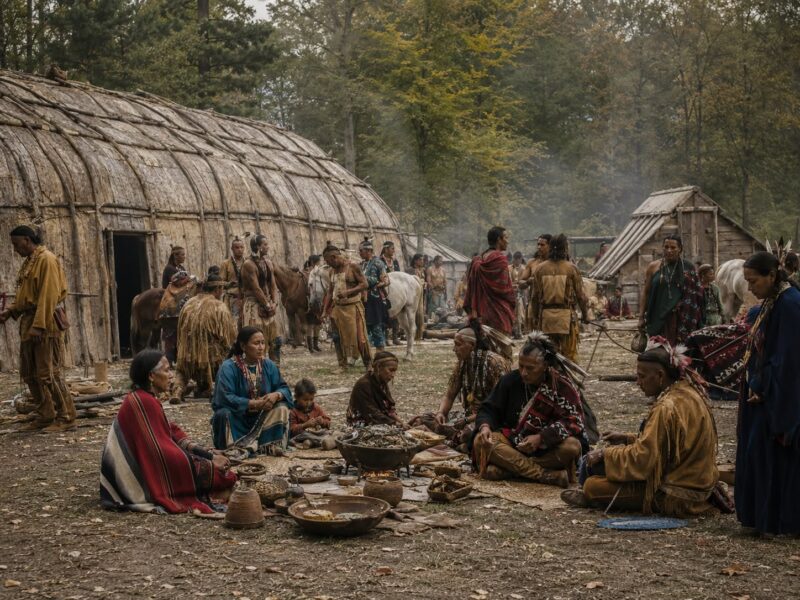
After some discussion with the Chiefs, they were promised that they all could return after the war with Britain was over and that their property would remain unharmed. After much debate among the Chiefs, they decided to depart in peace.
The Indians eventually made their way to Urbana where they came under the jurisdiction of a federal agent and sent to a temporary reservation (internment camp) at Piqua.
Eight soldiers remained in the village until the tribes were out of sight and then, to the horror of Rev. Copus, they ransacked the village and took everything of value, then deliberately set fire to the homes and all the crops.
Two older Native Americans who could not travel the distance were executed. Everything was destroyed! It would be Rev. James Copus who would receive the undeserved punishment for the wicked deed. The Indians observed the smoke five miles out as they walked to Mansfield. Their anger fell upon Reverend Copus, who they thought betrayed them.
On September 10, 1812, fifty warriors, who were on their way to join Tecumseh, heard about the destruction of Greentown and Jerometown and decided to have their revenge. They entered the Zimmer cabin, killing the entire family as the bloodshed began.
On September 14, the Copus family returned home after staying in the block house in the center of the village of Mansfield. They were accompanied by three soldiers after they heard the news of the Zimmer family.
The next morning around sunrise, on September 15, another five soldiers joined the others. Copus tried to get the soldiers to stay in his well-built and forfeited cabin, “I just have a bad feeling of the situation today,” he told his wife.
The soldiers insisted everything was fine and left the cabin to wash up at the spring coming out of the hill side across from the cabin. Copus insisted they take their rifles with them, but they didn’t.
As soon as the soldiers reached the spring they were ambushed. All five were killed, three ran into the woods and were chased down, the other two were killed at the spring. The remaining soldiers in the cabin began firing.
On hearing the yelling and gun fire, Reverend Copus seized his gun, partly open the door in order to discharge it, but in the act of firing he was hit with a lead ball through his chest and died a few hours later.
The battle raged on until around 11 o’clock in the morning, with seven people in the cabin, against the large war party outside. The Native Americans finally gave up and retreated, killing what cattle and sheep they could along the way.
Of course, all of this could have been avoided if the situation at Greentown and Jerometown would have been handle in a more humane way. However, history tells us this would never be the story of the relationship between Native Americans and the U.S. Government.
In our previous article we learnt about the Trail of Tears and the Indian Removal Act of 1830. If you are interested in our previous articles, you can contact me at Living History Productions, 302 Center Street, Ashland, Ohio