
Ashland Firefighters Complete Four-Day Structural Collapse Training: “Training That Someday Might Save a Life”
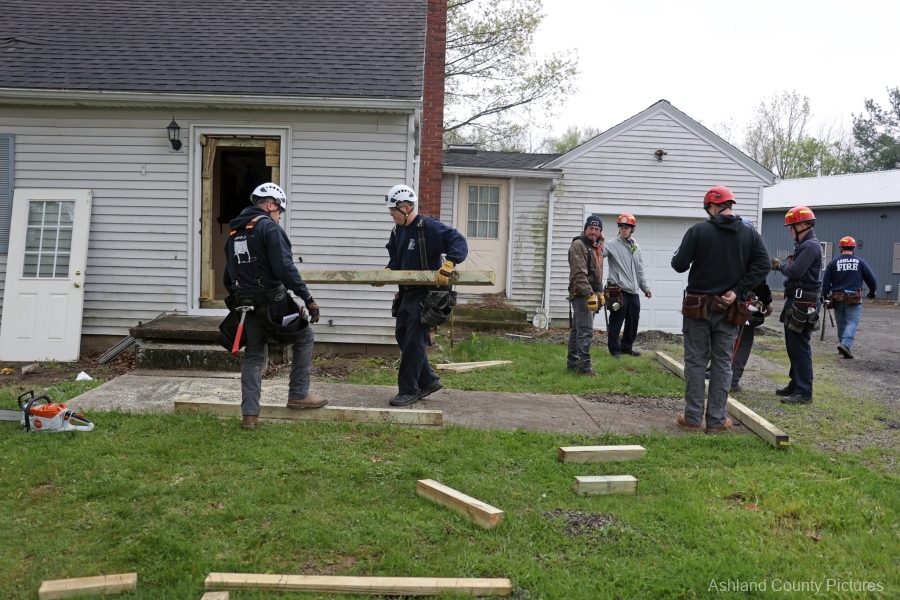
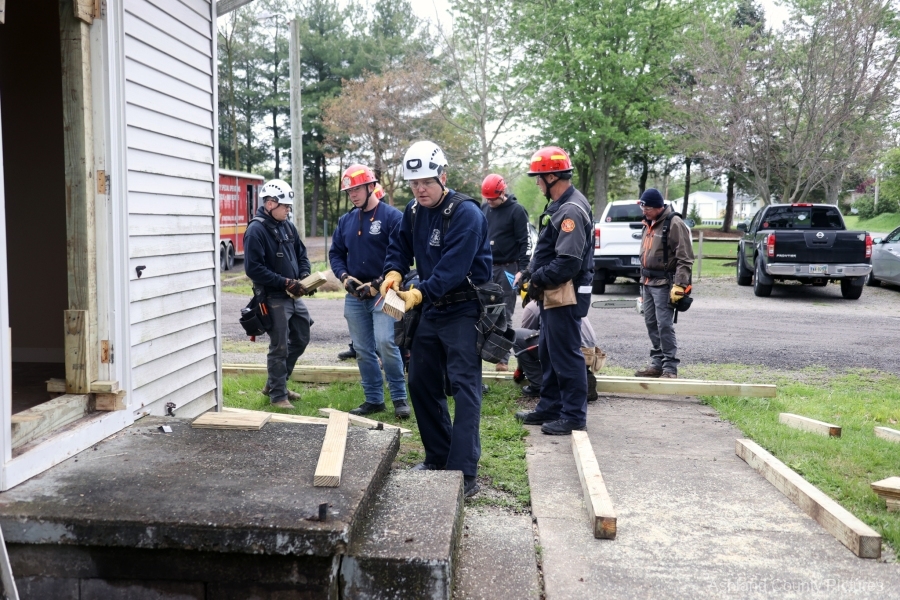
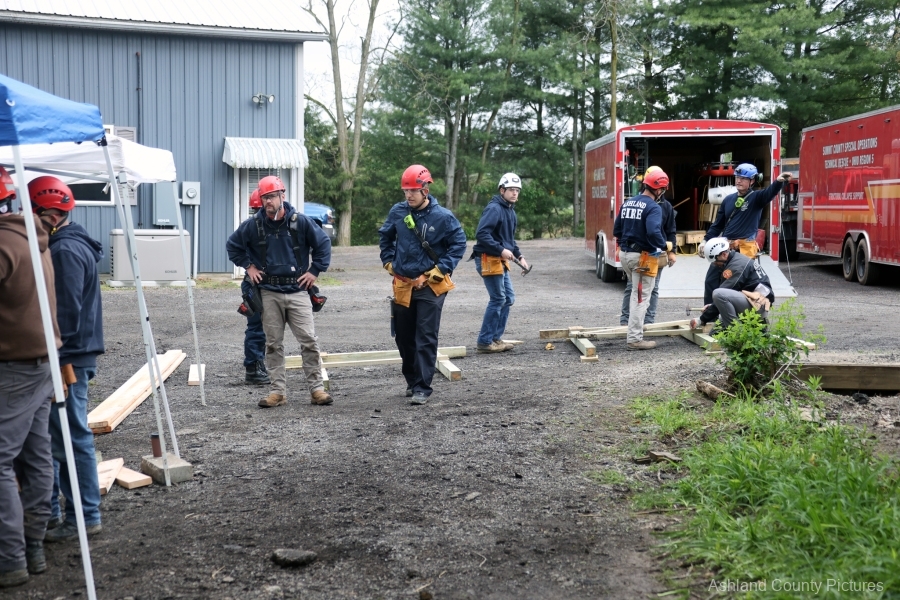
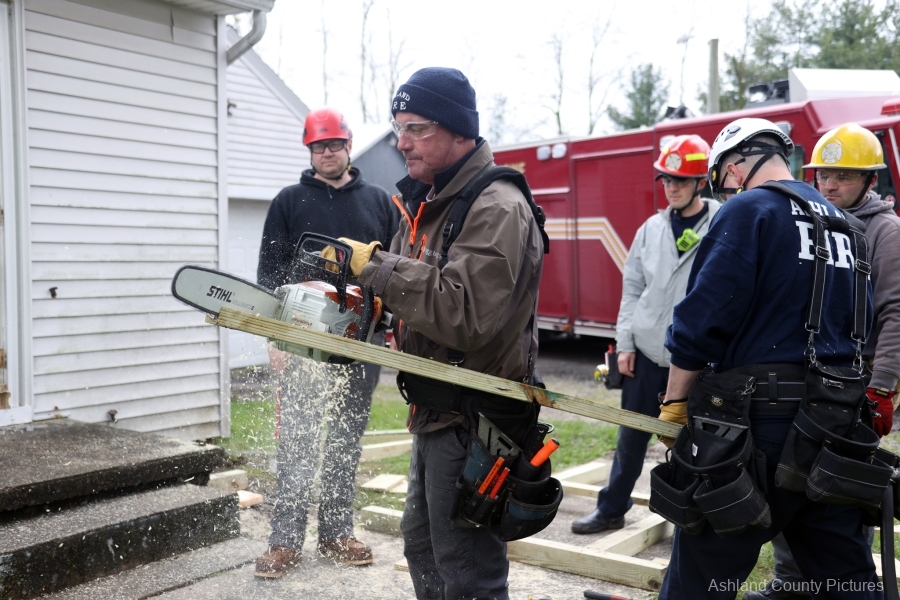
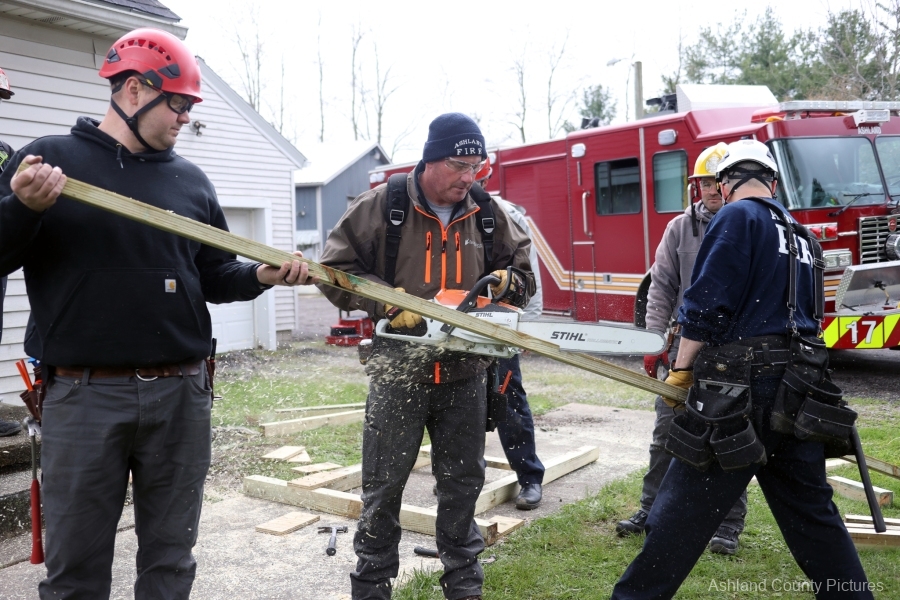
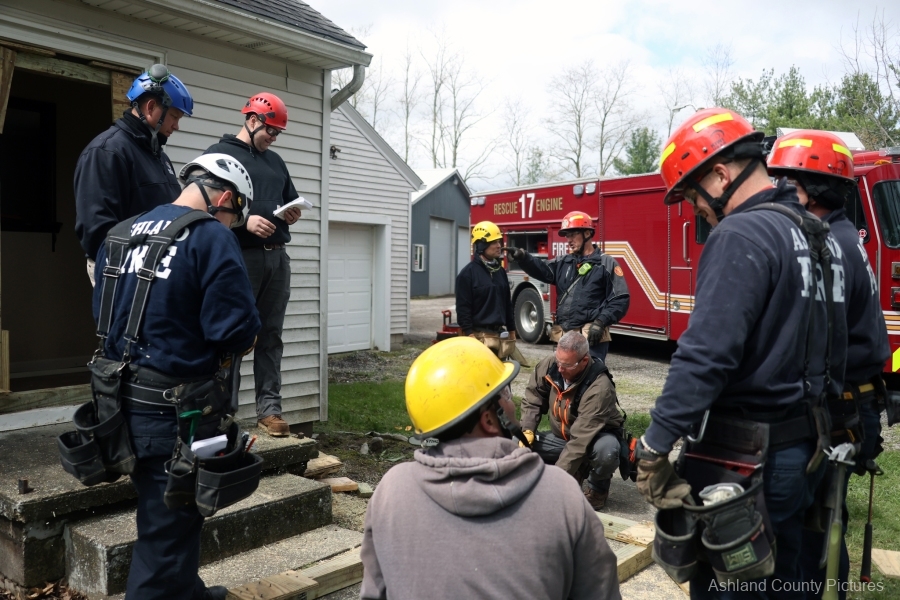
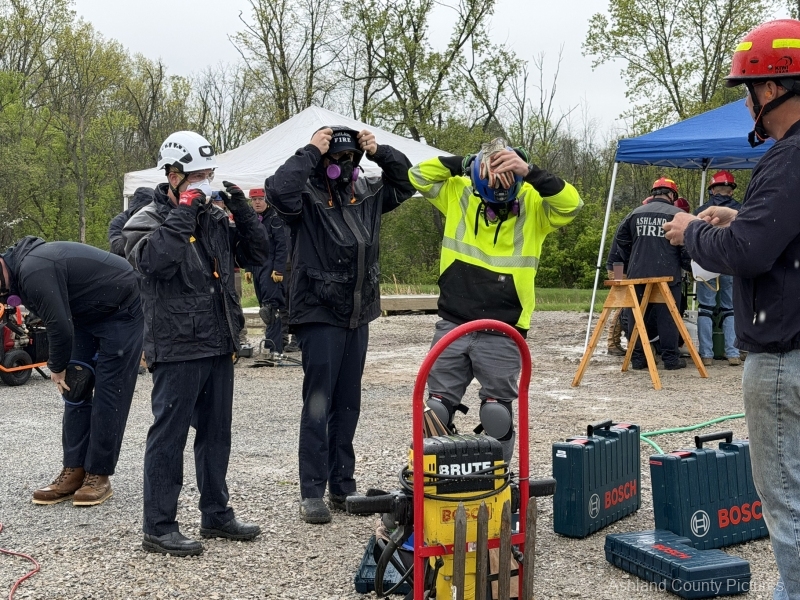
ASHLAND, Ohio — For four days, members of the Ashland Fire Division traded the normal rhythm of firehouse life for saws, lumber, shoring systems, torches and high-pressure rescue scenarios, training for the kind of “bad day” they hope never comes, but must be ready to face.
For a little while, it felt almost like being back in the Army covering a training mission: friendly banter, focused instruction, teamwork and that unmistakable spirit of camaraderie. But beneath the joking, the dust and the sound of saws cutting through concrete was a serious purpose, learning skills that could someday save the life of a trapped victim, or a fellow firefighter.
The training focused on structural collapse operations, teaching firefighters how to safely enter, stabilize and work around damaged buildings after events such as tornadoes, hurricanes, vehicle crashes into structures or other incidents that leave walls, floors, ceilings, steel beams or doorways compromised.
According to Ashland Fire Division Captain Tyler Smith, the four-day training was made possible through a grant secured by the Ashland County Emergency Management Agency.
“It’s a four-day training that was provided through a grant that Ashland County EMA secured,” Smith said. “It was $24,000 that they were able to bid out.”
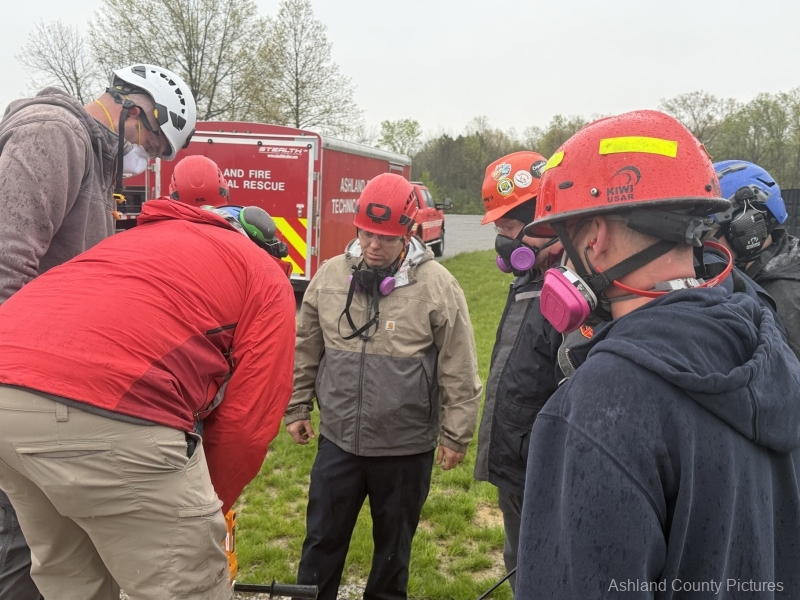
The training was awarded to Bad Day Training, a company that specializes in emergency response instruction, including hazardous materials and technical rescue training. Smith said the company brought three instructors each day to work with firefighters on-site.
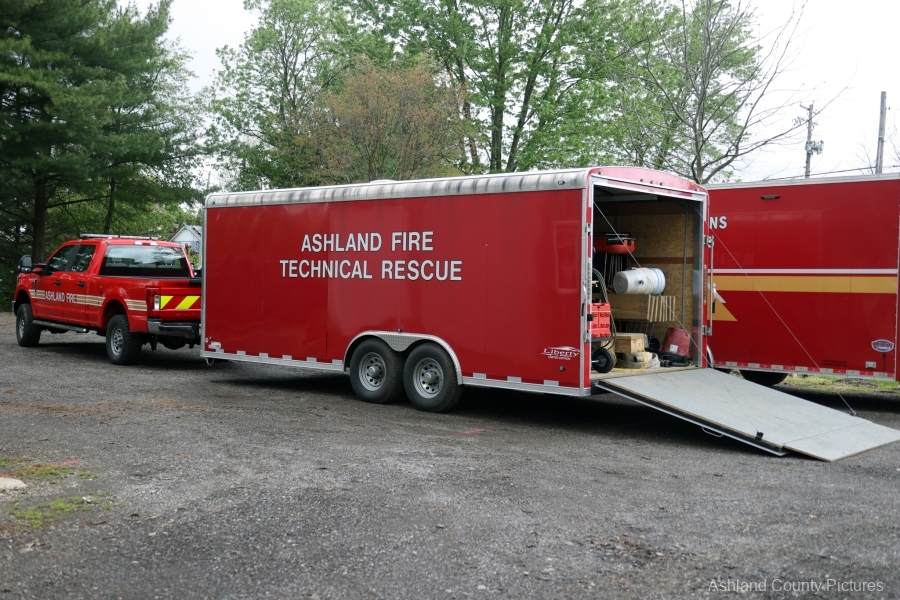
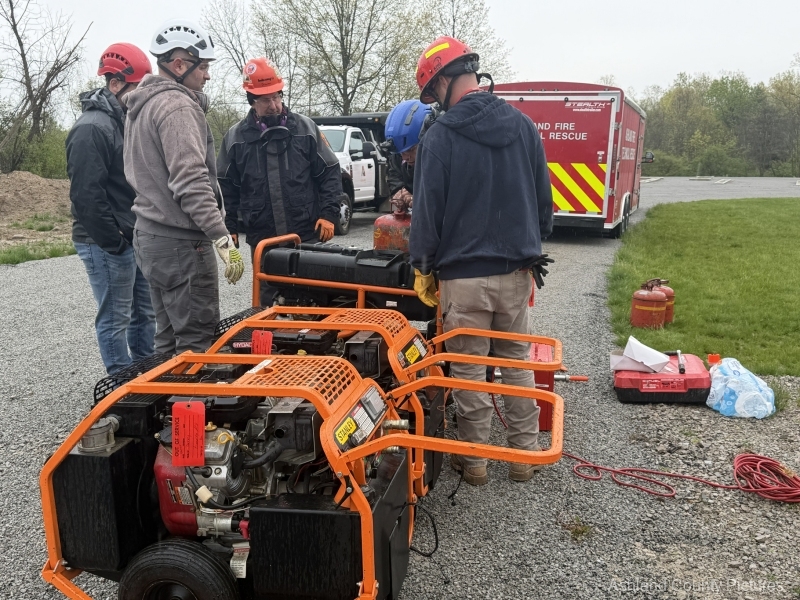
“Through the coordination of Ohio Region 5 USAR and Ashland Fire, we were able to have all the tools necessary on site to complete our class,” Smith said.
The class included 18 Ashland City firefighters, along with one firefighter from Wooster City and two firefighters from Mansfield City.
Smith said the first day began with classroom instruction and orientation before firefighters moved into hands-on scenarios during the remaining days.
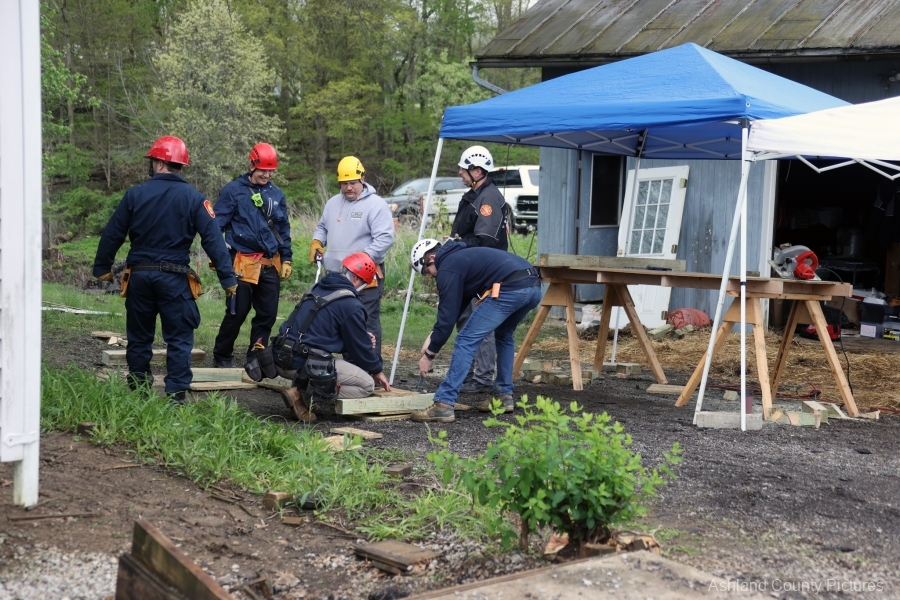
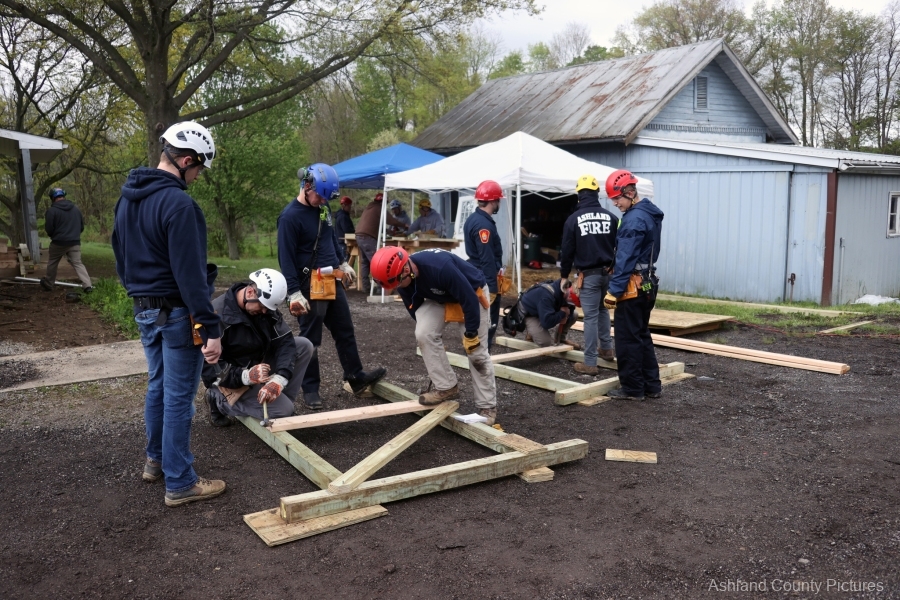
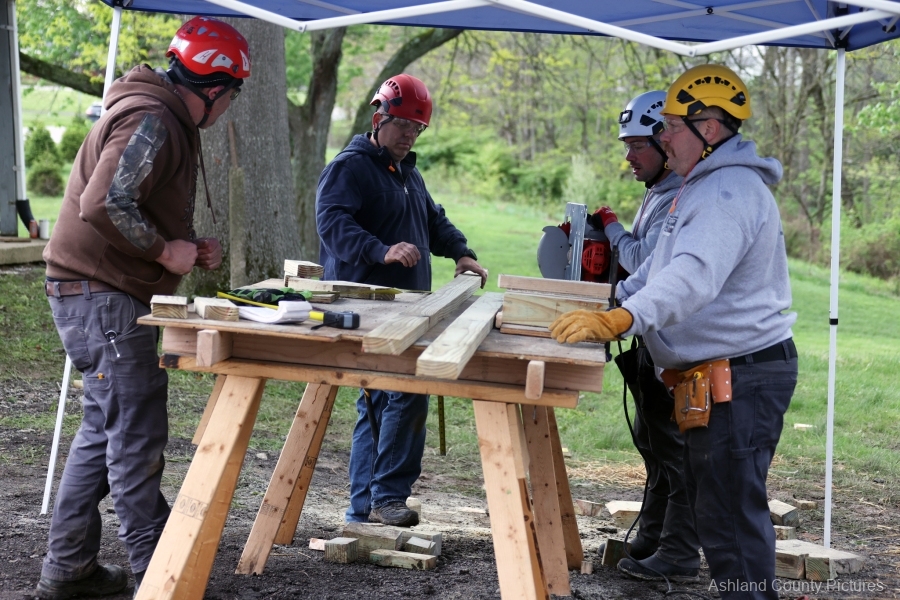
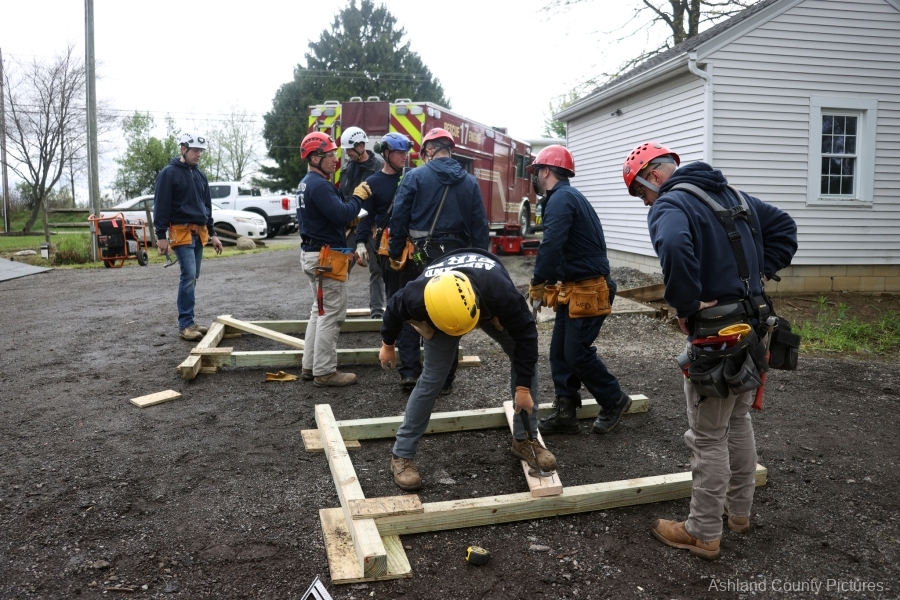
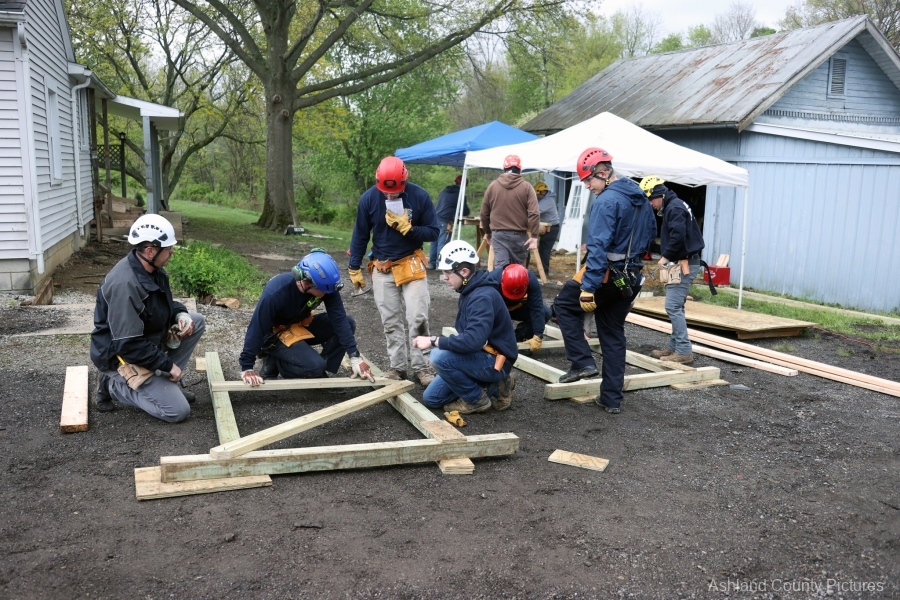
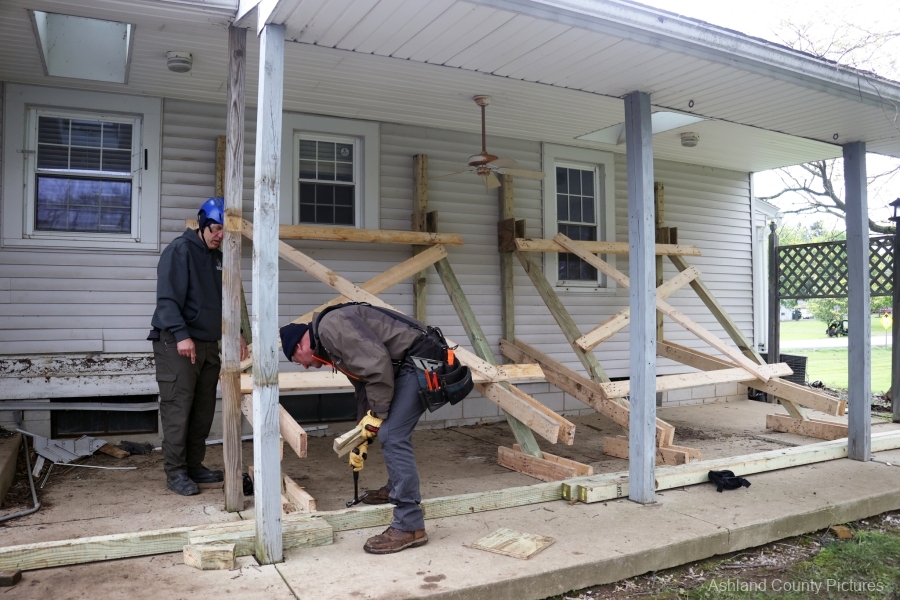
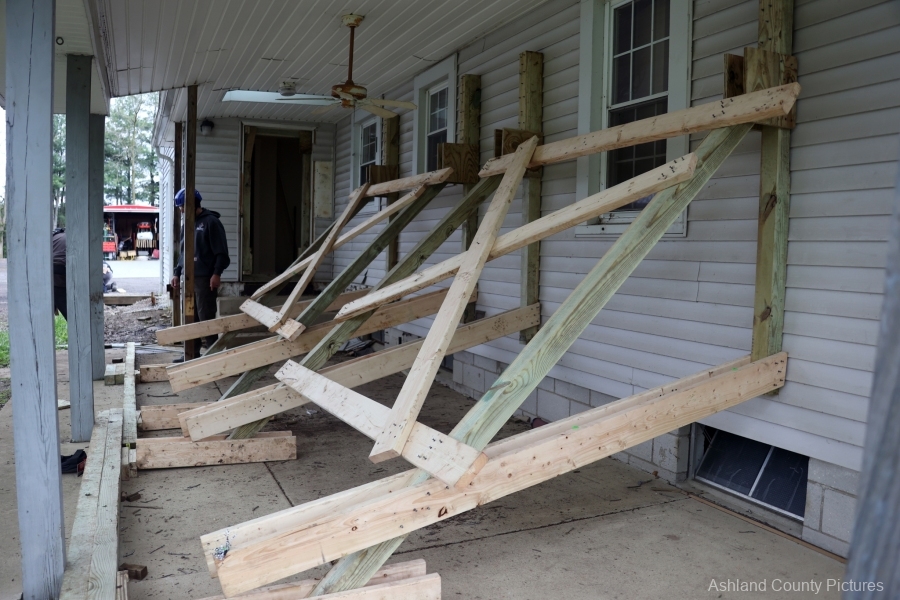
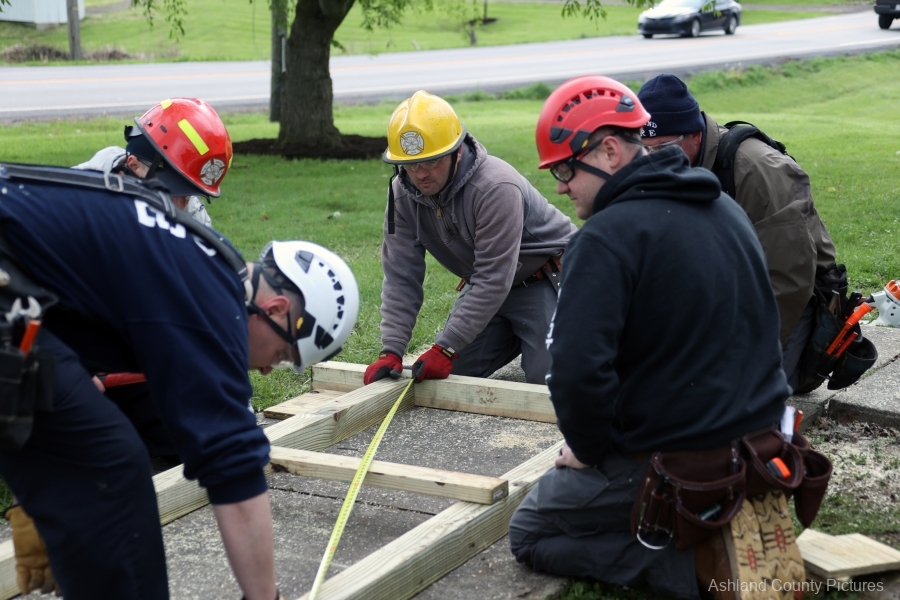
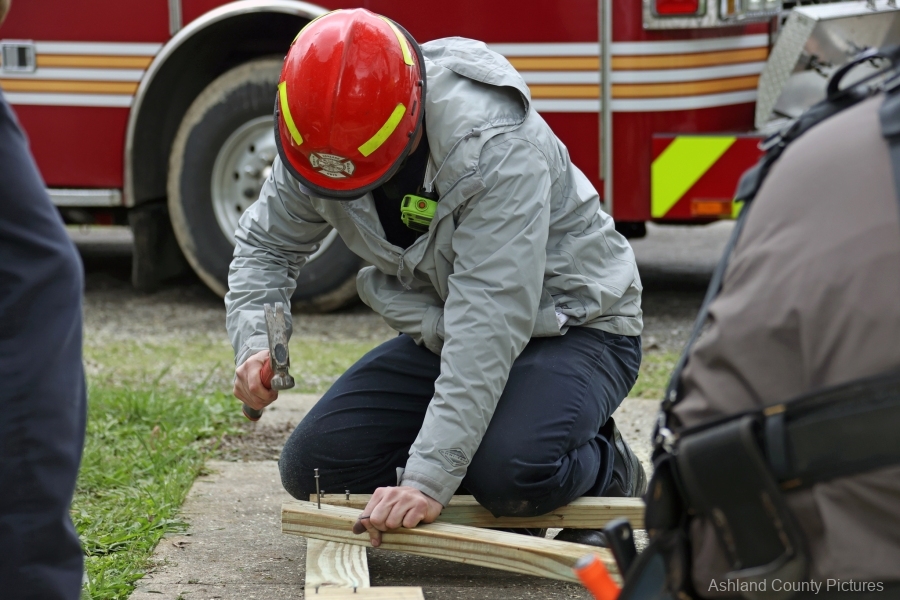
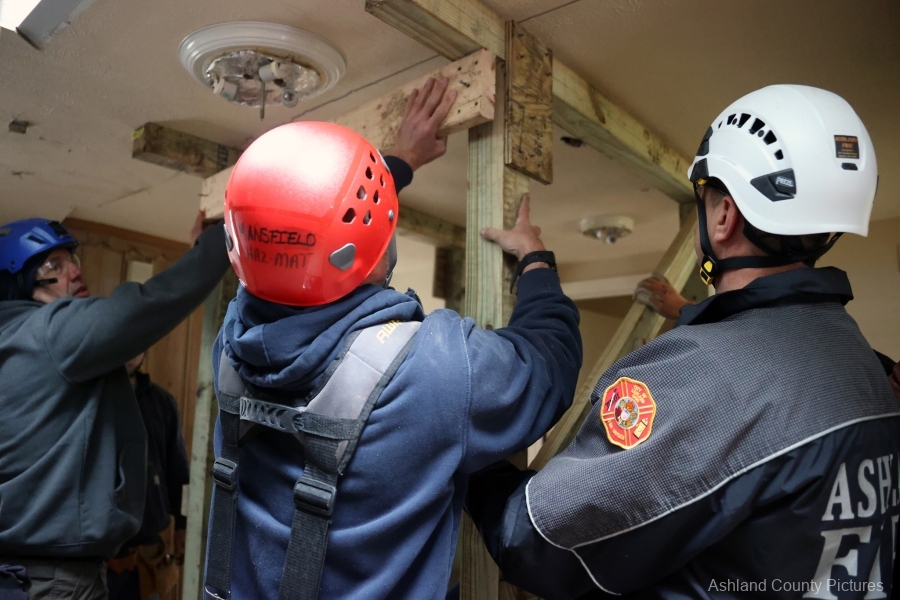
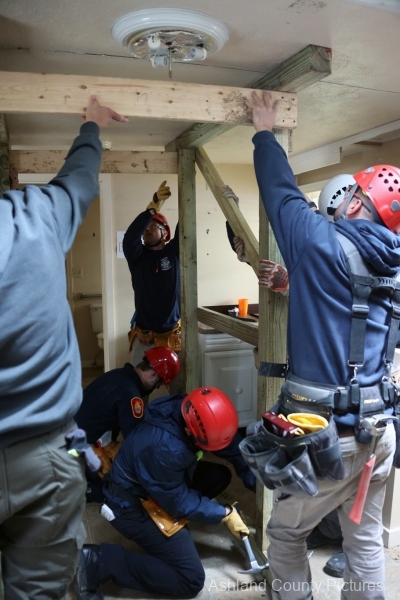
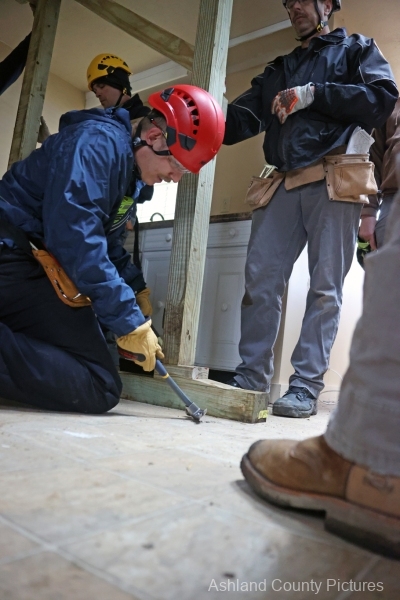
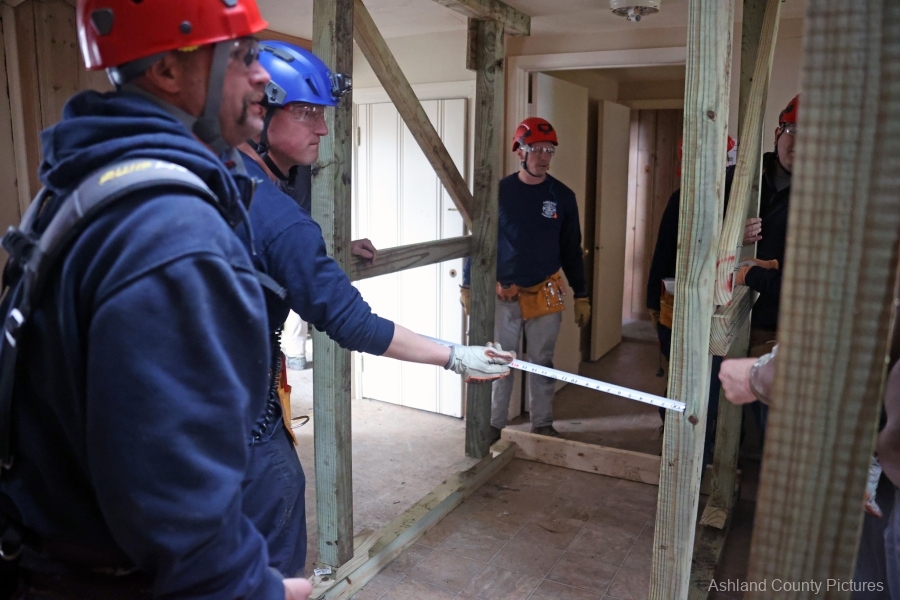
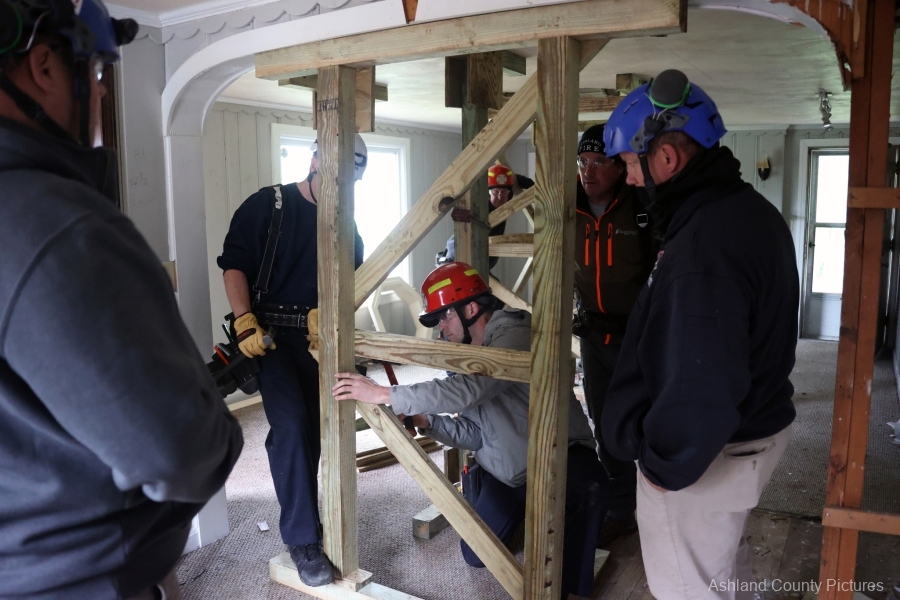
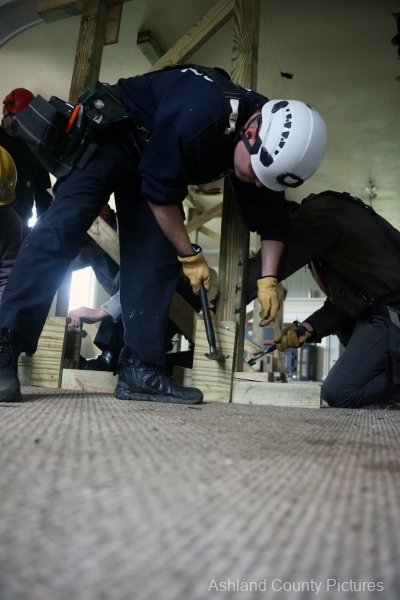
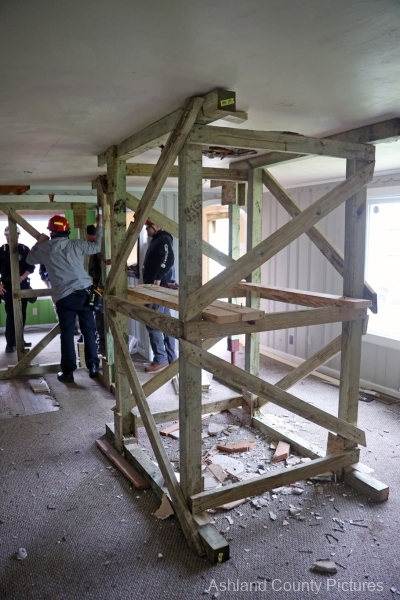
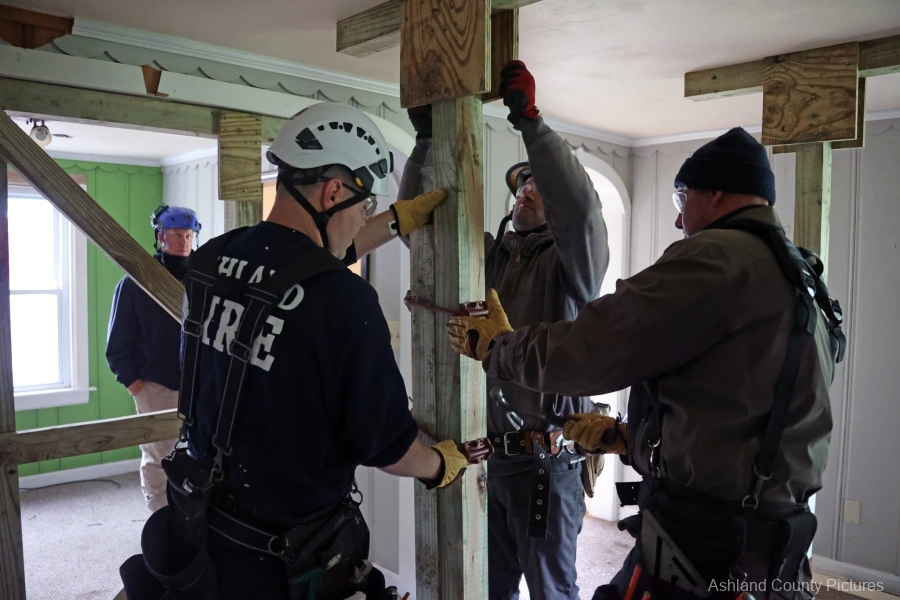
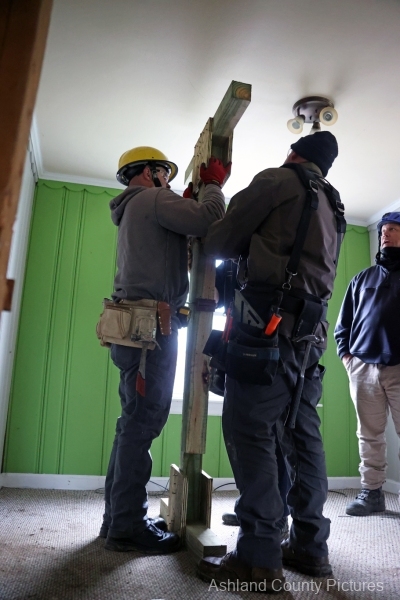
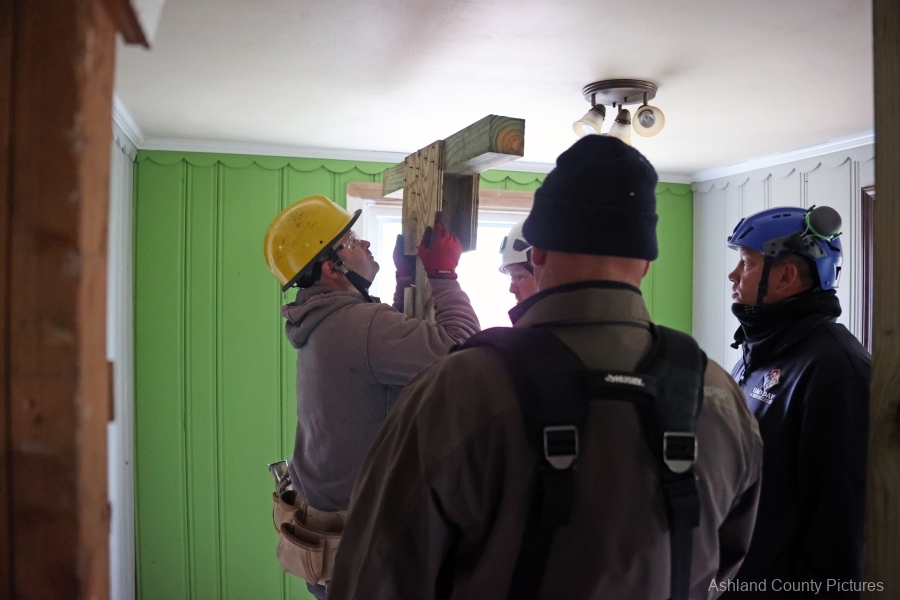
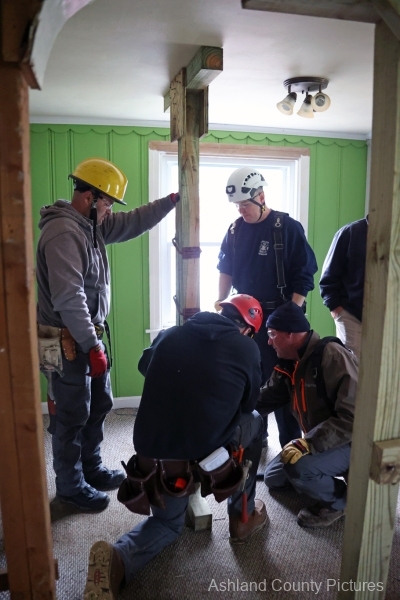
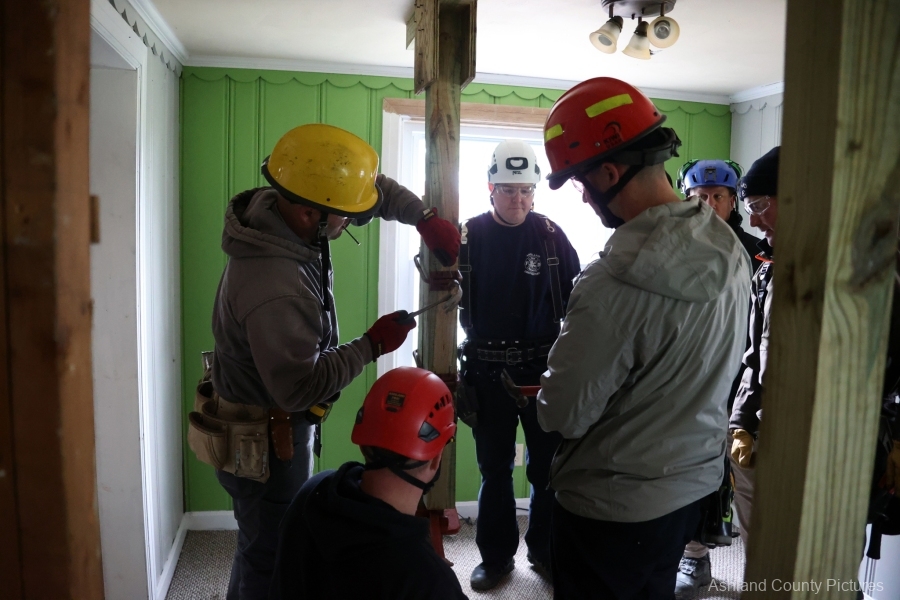
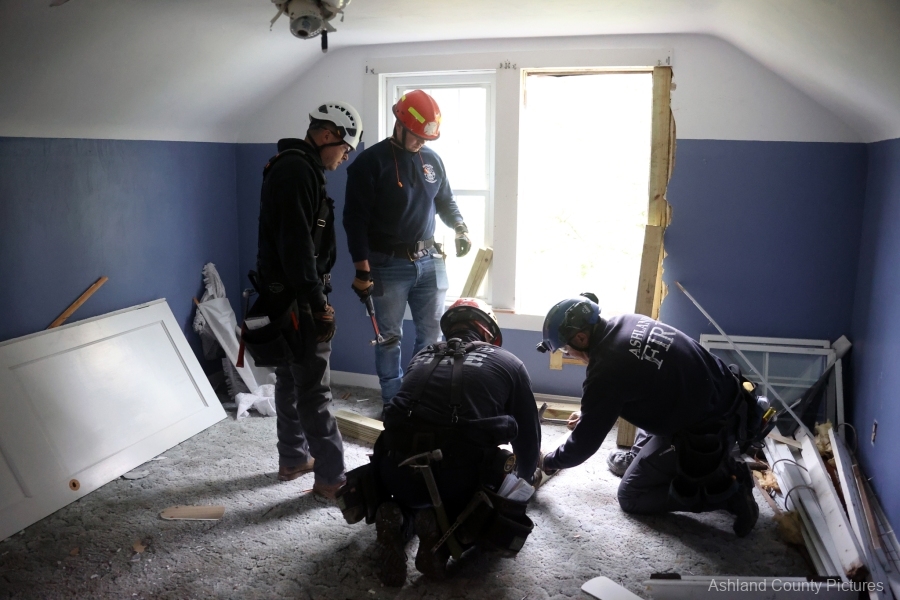
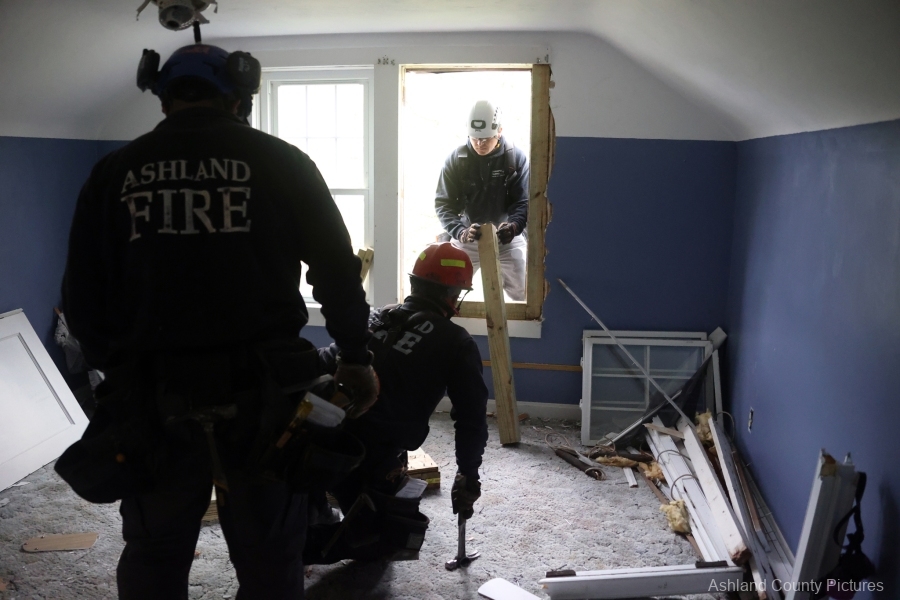
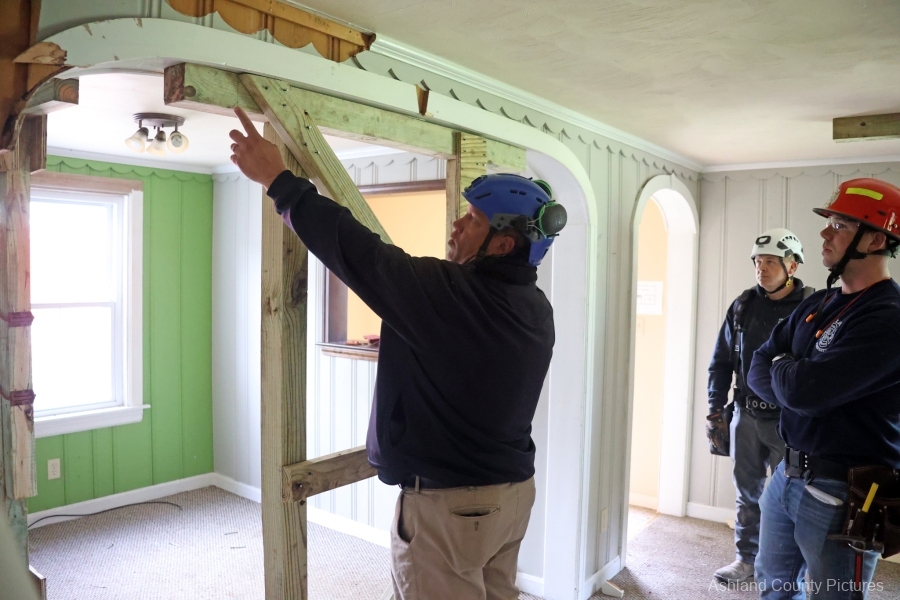
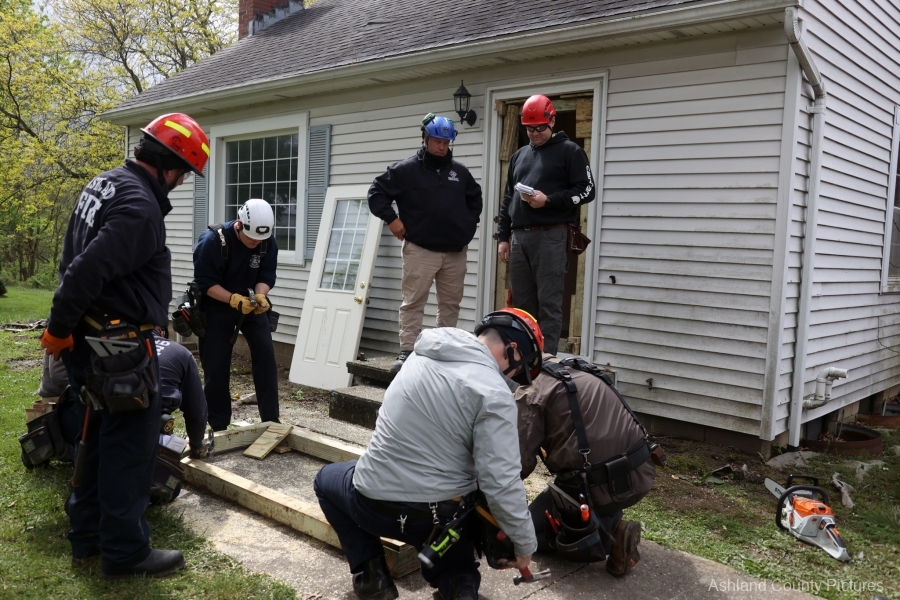
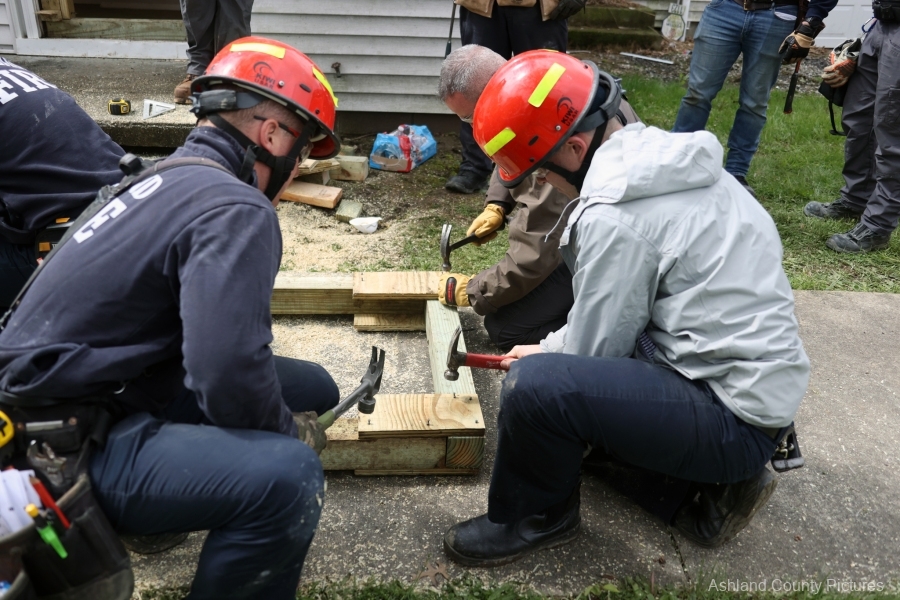
“Tuesday was a classroom and orientation portion of the class,” Smith explained. “Days two and three were all hands-on building shores, building rakers, just teaching guys on how to support an unstable structure.”
“Yesterday’s scenario was that the building is unsecured, so we have to shore as we go,” Smith said. “We set rakers to start the morning, which would allow us to support the exterior walls.”
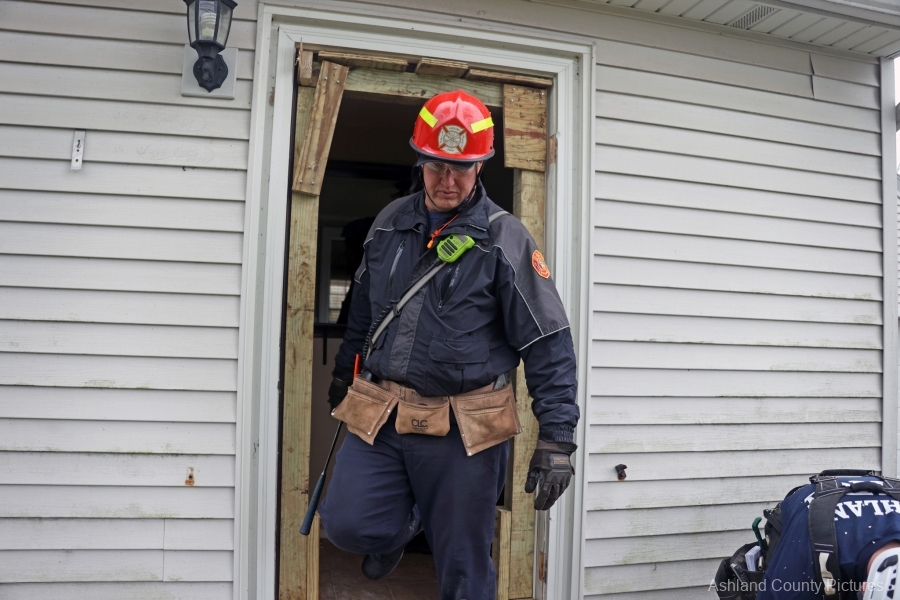
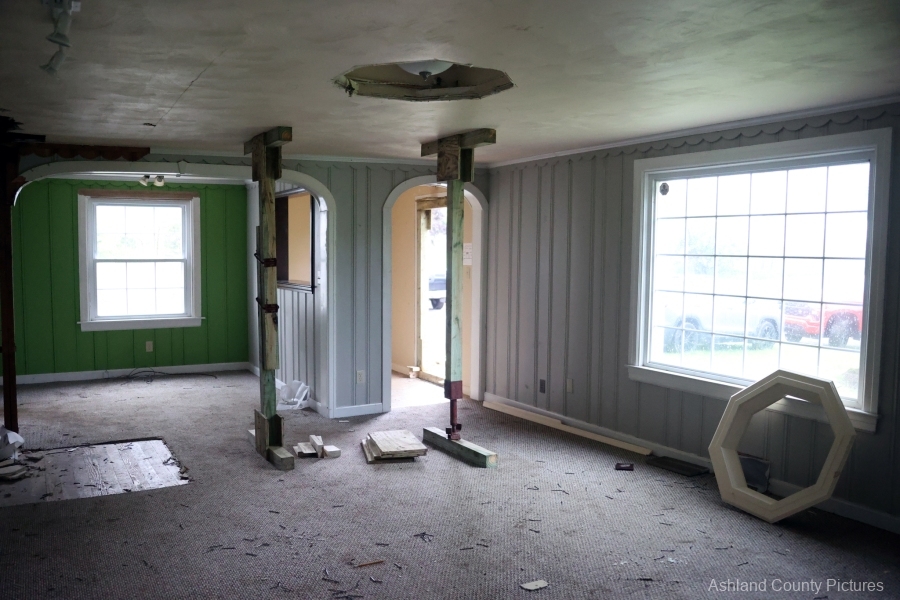
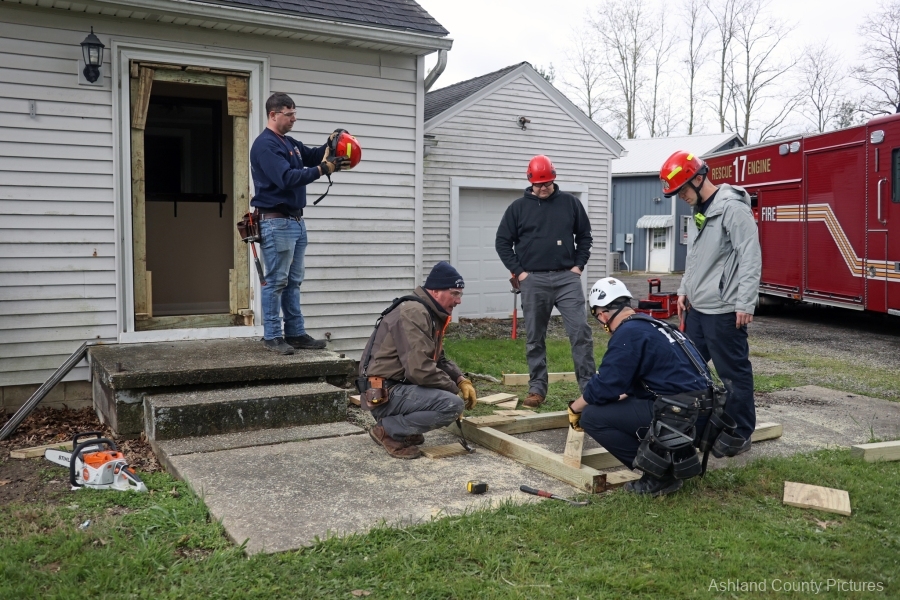
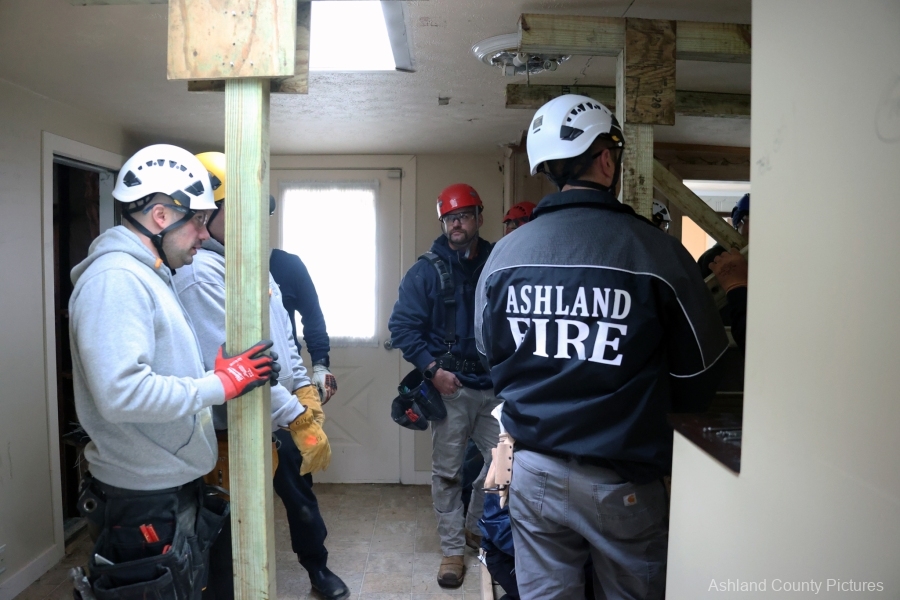
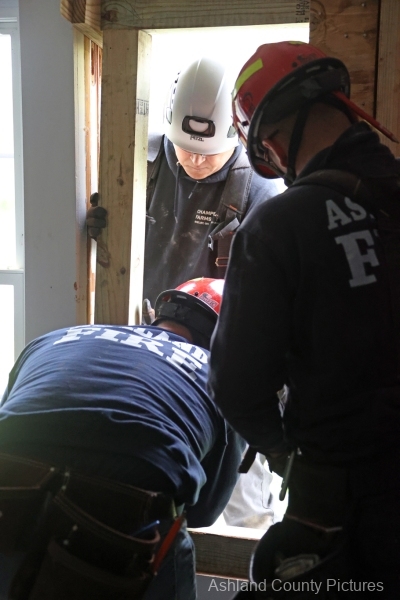
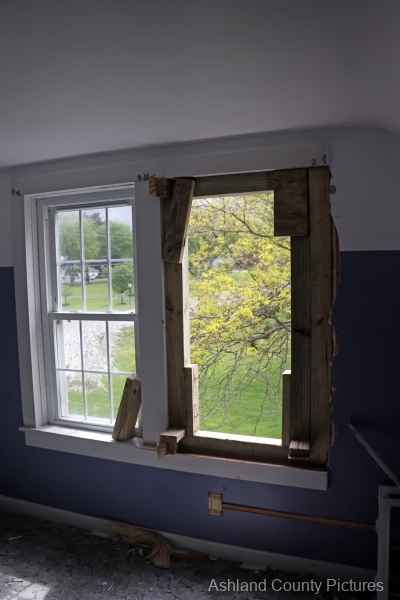
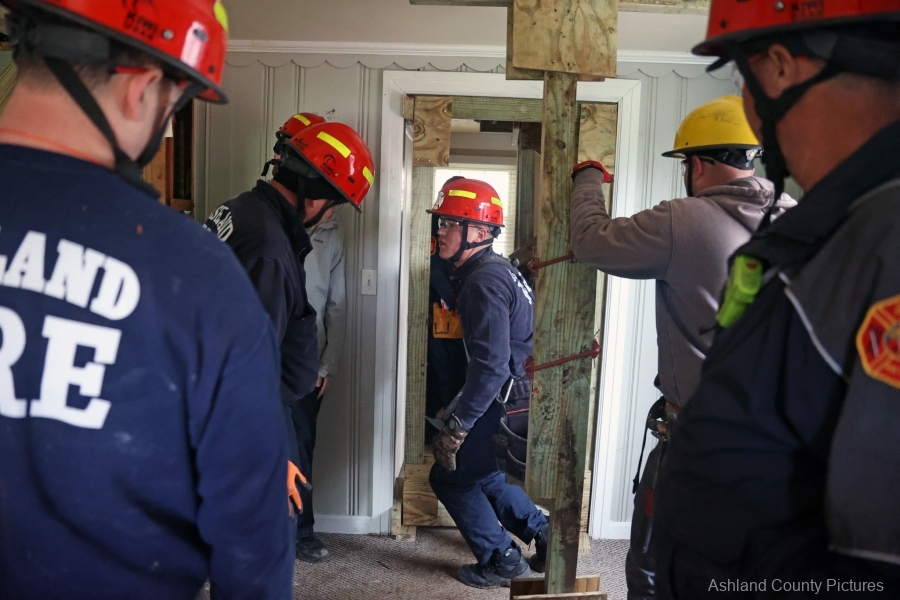
From there, crews worked their way deeper into the building, installing door shores and temporary spot shores to create safer working conditions inside.
“Ultimately, that allowed us the safety inside the structure to build a more permanent shore,” Smith said.
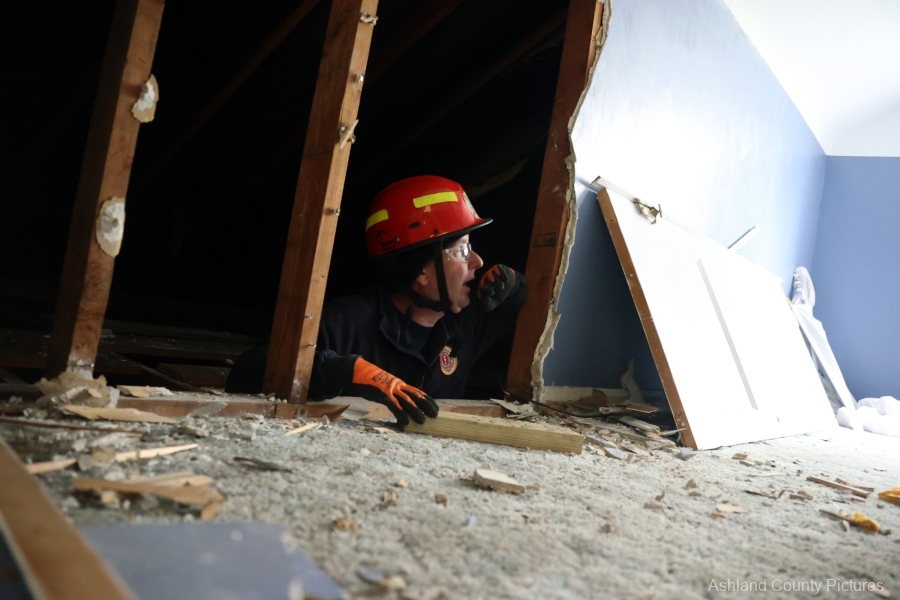
The scenario also required firefighters to simulate a rescue on an upper level of the structure. Smith said crews had to create an access point through the ceiling or second-story floor in order to reach victims believed to be trapped upstairs.
“The scenario was that there were victims inside upstairs,” Smith said. “We had to build a Laced Post Shore to enable us to breach the ceiling or floor of the second story, go upstairs and then rescue the victims upstairs.”
For firefighters, the training required precision, teamwork and patience. Every board, brace and angle mattered. Every doorway had to be assessed. Every step forward depended on making the next area safe enough to enter.
Paul Tepley, a technical rescue instructor with Bad Day Training, said that level of detail is exactly what structural collapse training demands.
“What we’re doing here is a structural collapse operations class,” Tepley said. “We’re teaching the members how to shore up a building after a hurricane, after a tornado, after a car drives through it.”
Tepley said the goal is to teach responders how to overcome structural damage while protecting both the victims and the rescuers.
“Anytime there is a compromise to the structure, we’re teaching members how to overcome the compromise,” Tepley said. “Possibly rescue somebody, or just shore the building so nobody else gets injured, hurt or killed.”
In a collapse scenario, Tepley said firefighters must always operate under the assumption that someone may be trapped until proven otherwise.
“We always go into it thinking that somebody could be trapped,” he said. “So yes, time is of the essence until we know that everybody is out.”
But speed alone is not enough. Tepley said firefighters must move quickly while also making sure the structure is safe enough for crews to work inside.
“We have to go in. We have to make sure everybody’s out,” Tepley said. “And we have to do that safely for everybody. So that’s why you see the shoring going on.”
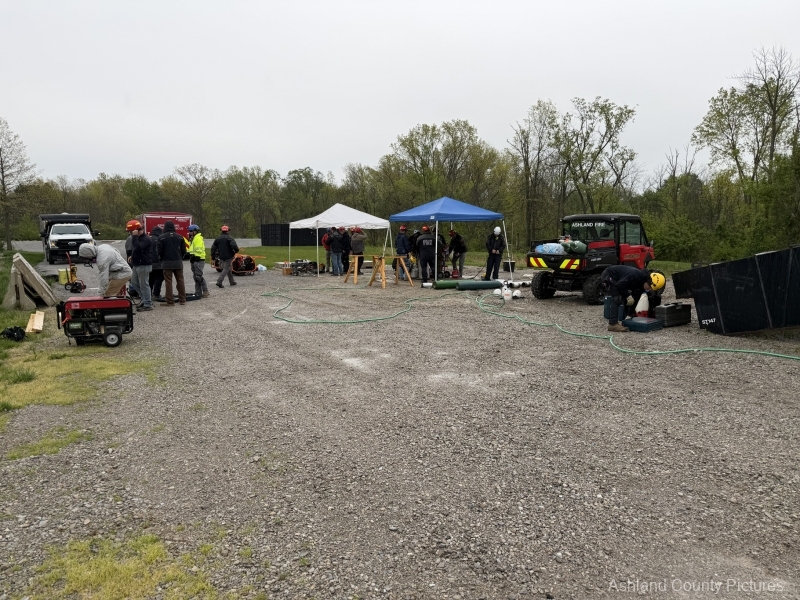
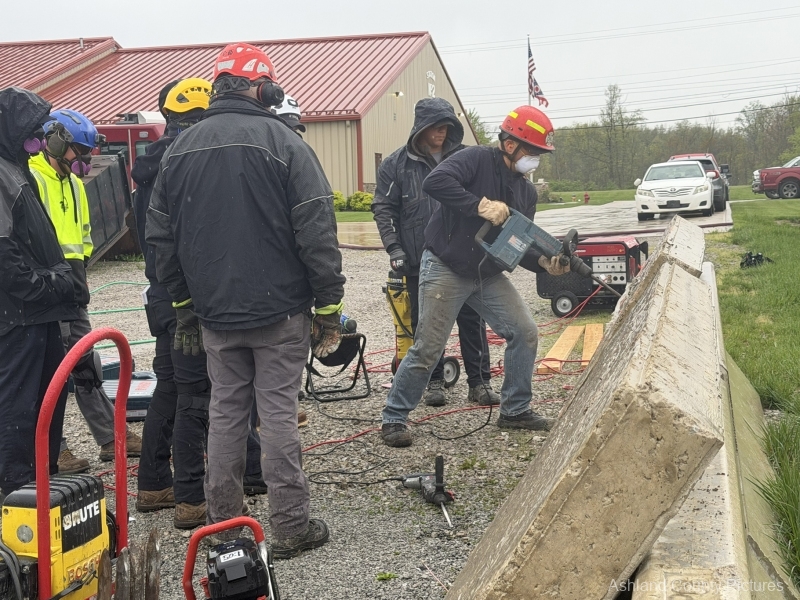
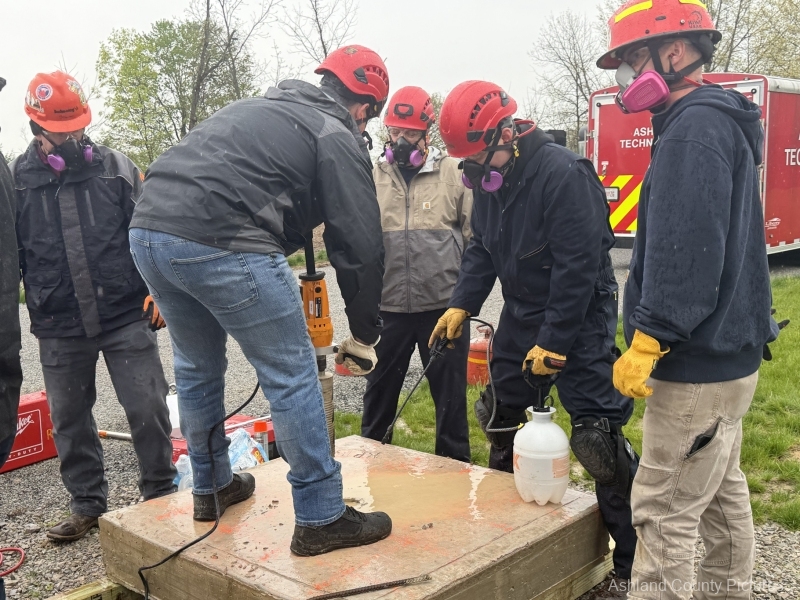
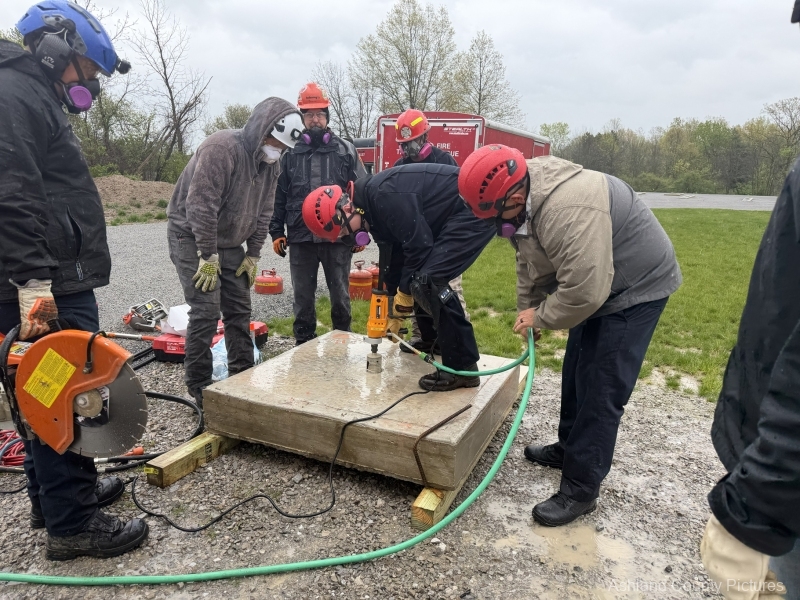
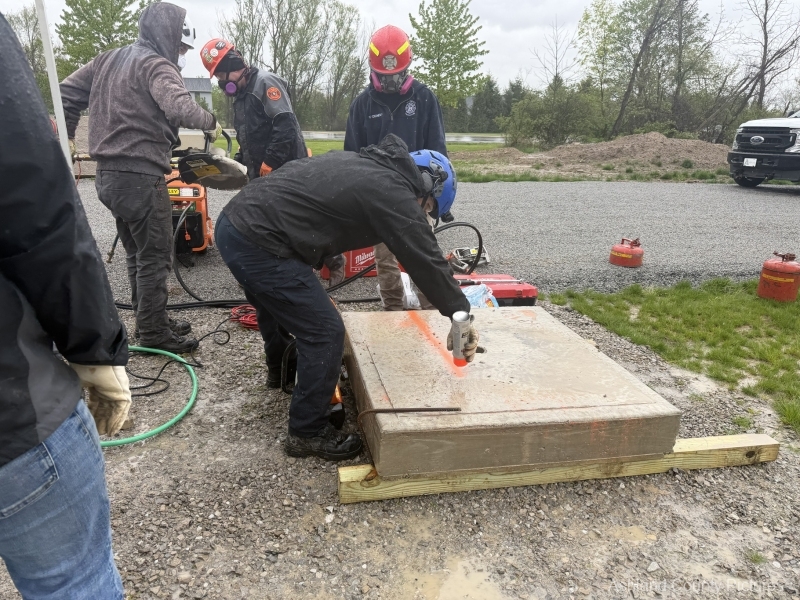
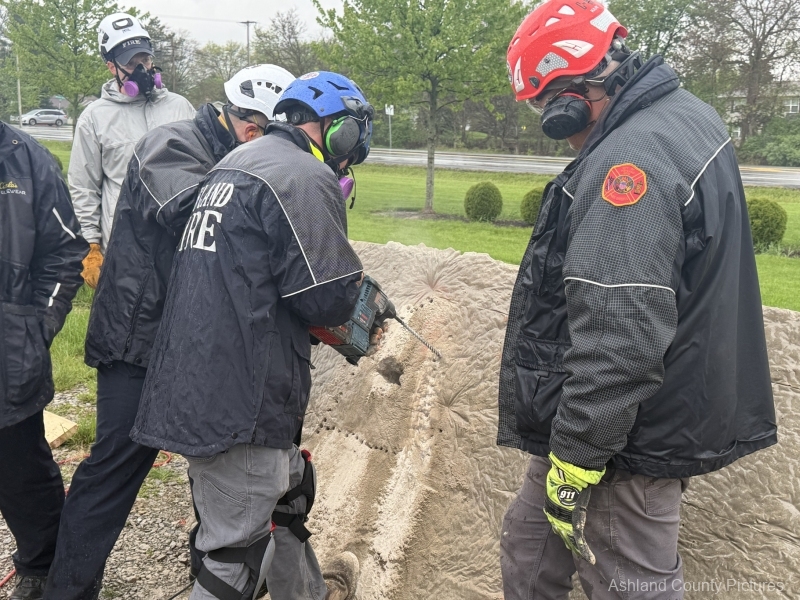
Another part of the training focused on the careful and technical process of cutting through concrete and metal when victims may be trapped beneath or behind debris.
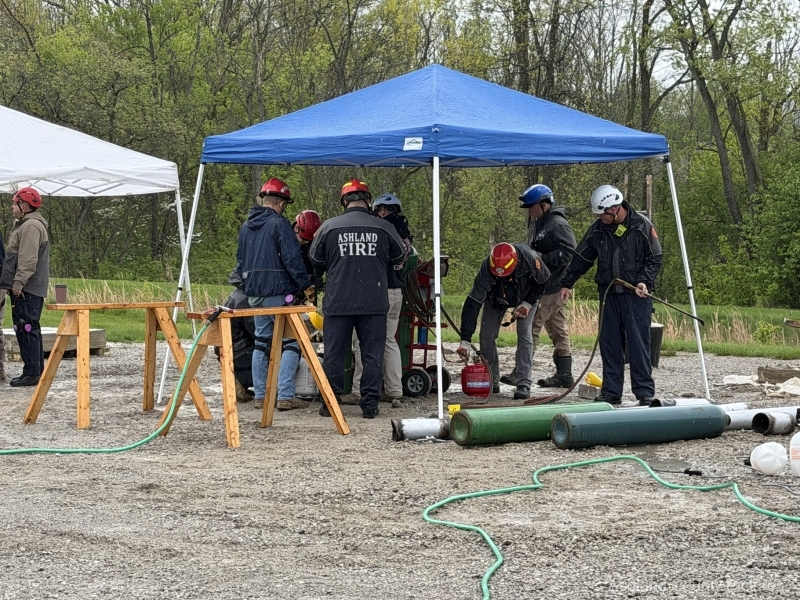
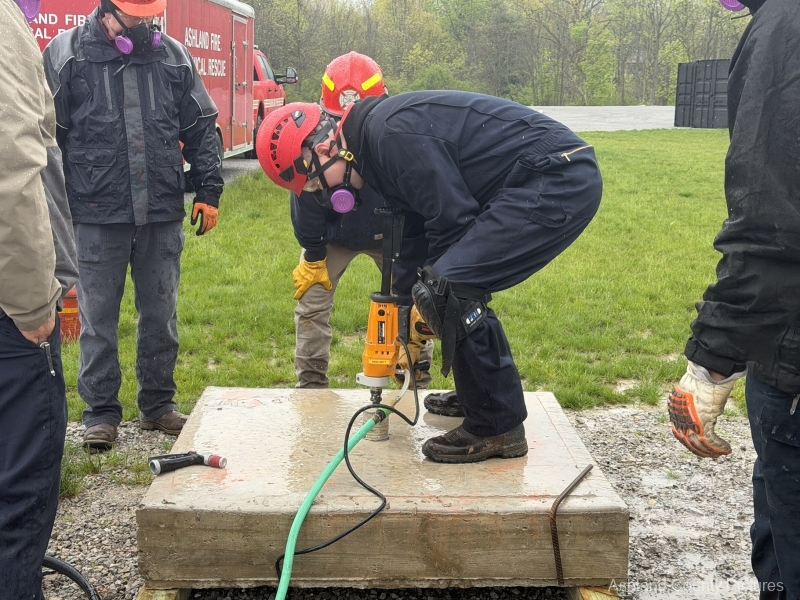
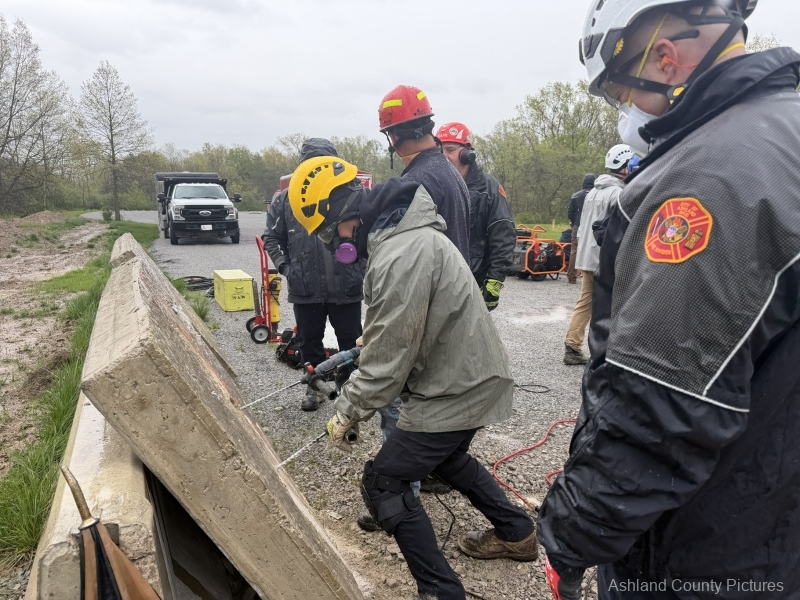
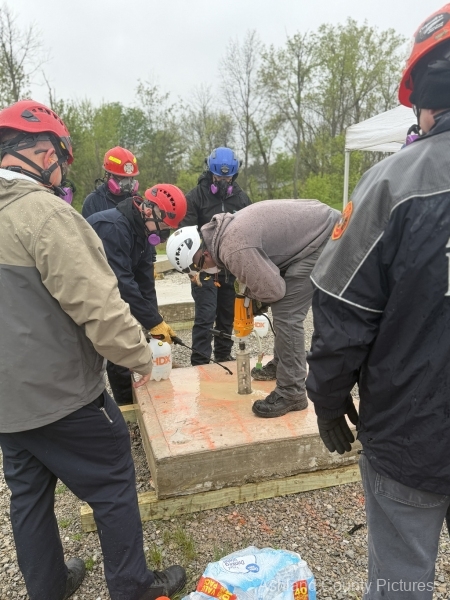
Tepley explained that one station involved what is known as a “stitch cut,” a method used when rescuers believe a victim may be on the other side of a wall.
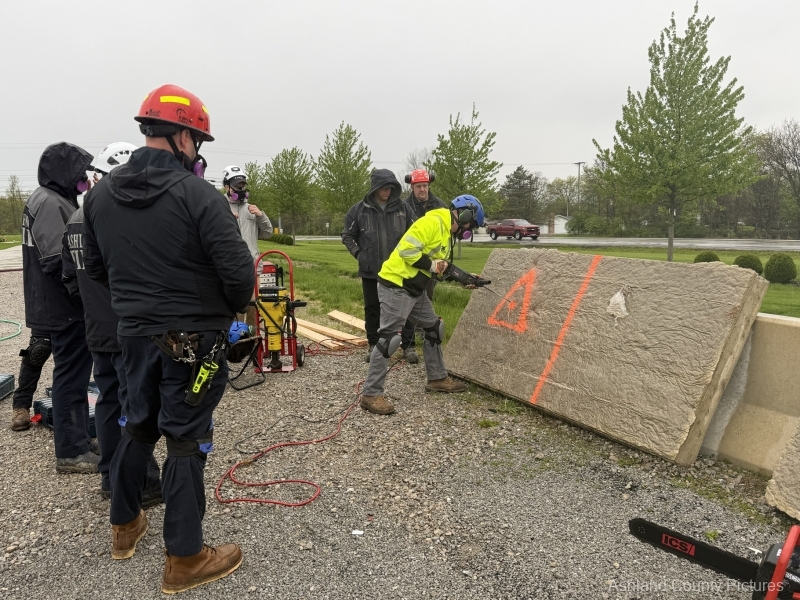
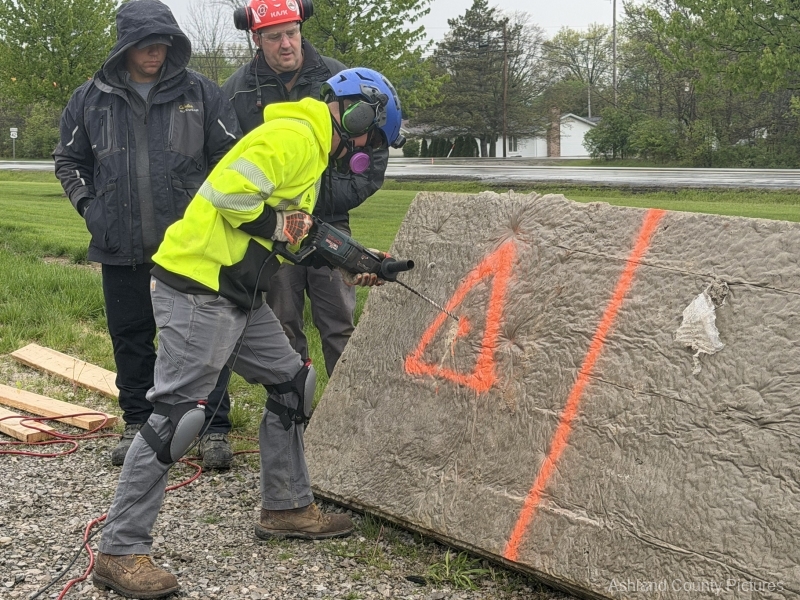
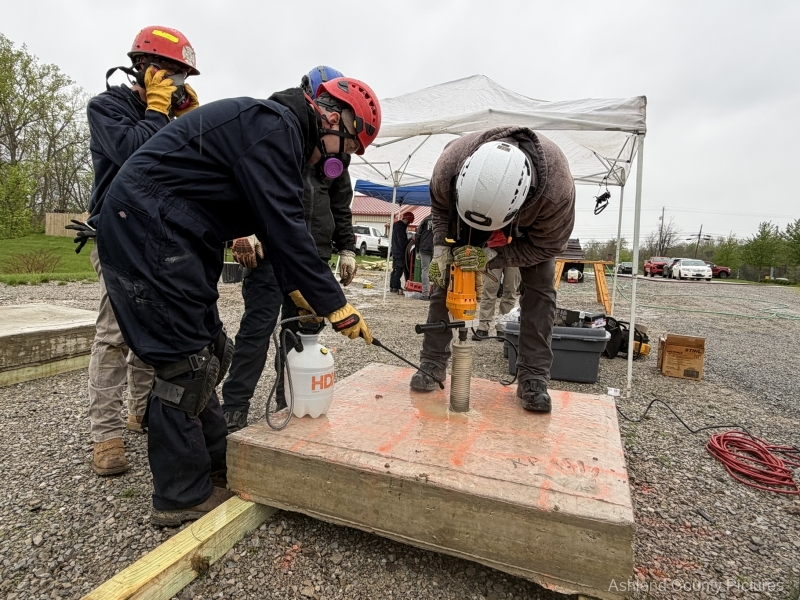
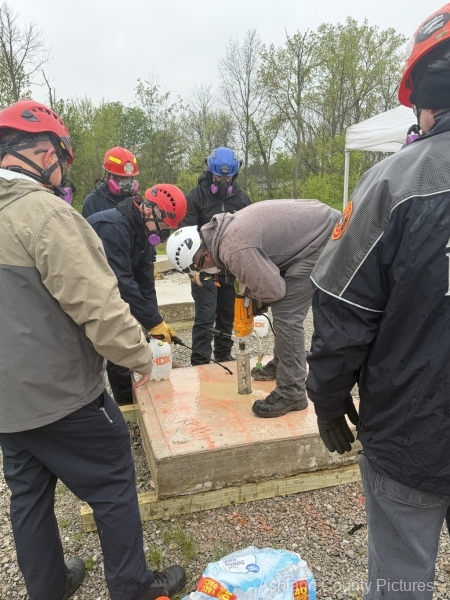
“The station we’re working on right now is called a stitch cut,” Tepley said. “We’re simulating that there’s a victim on the other side of the wall, and you can’t just break the concrete in with a big jackhammer because now you’re showering the victim with all the concrete, hurting or possibly killing the victim.”
Instead of smashing through the wall, firefighters make a series of precise cuts around the concrete, forming a triangle pattern. Tepley said crews then use a hammer and chipper to connect those cuts, allowing them to remove a larger piece of concrete in a controlled way.
“What you have to do is make many stitches around in a triangle and then take a hammer and chipper and connect the dots,” Tepley said. “You’re trying to get a big piece of concrete to come out and not on the victim, and you’re going to lift it out. That’s called a stitch cut.”
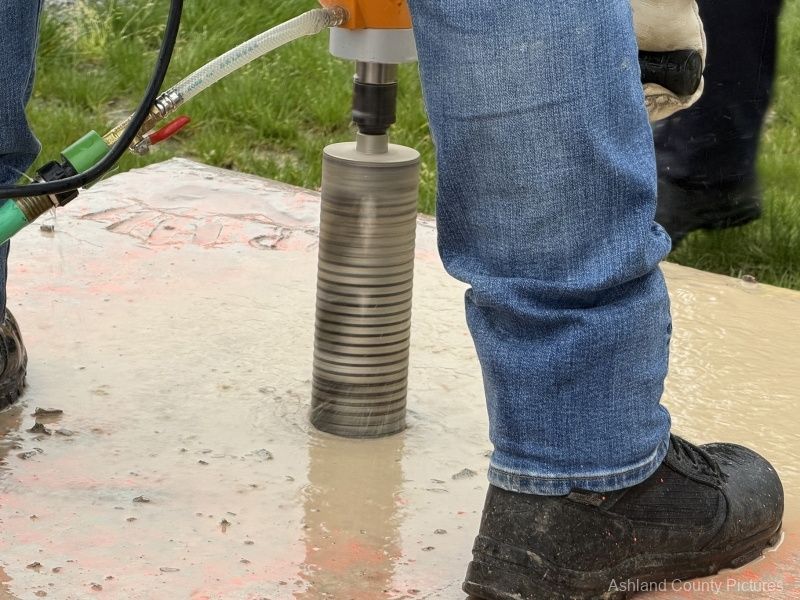
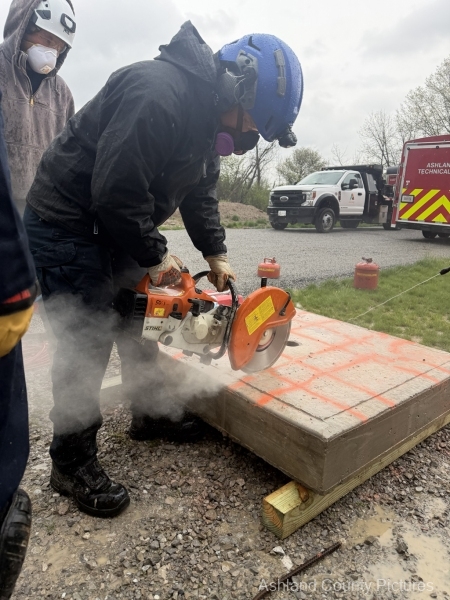
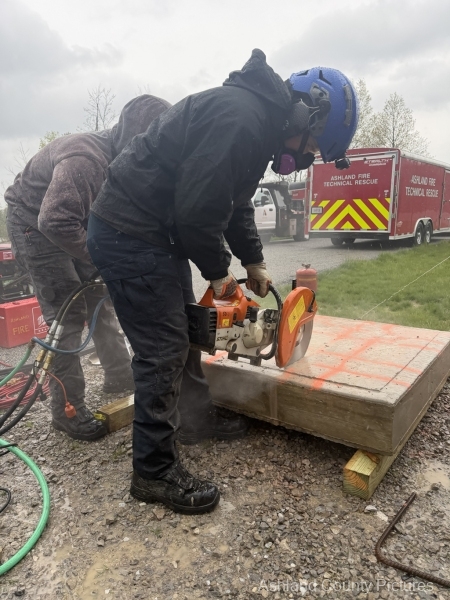
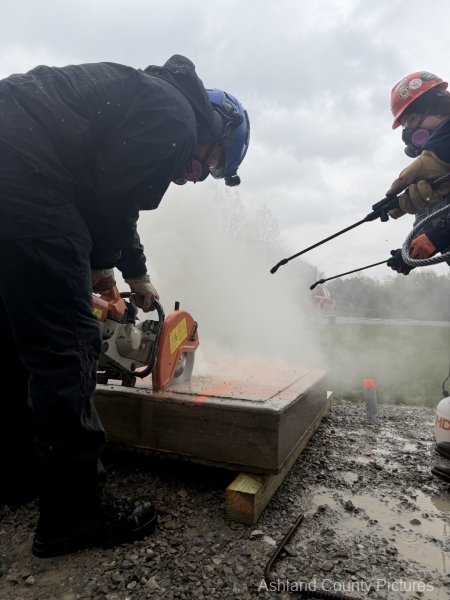
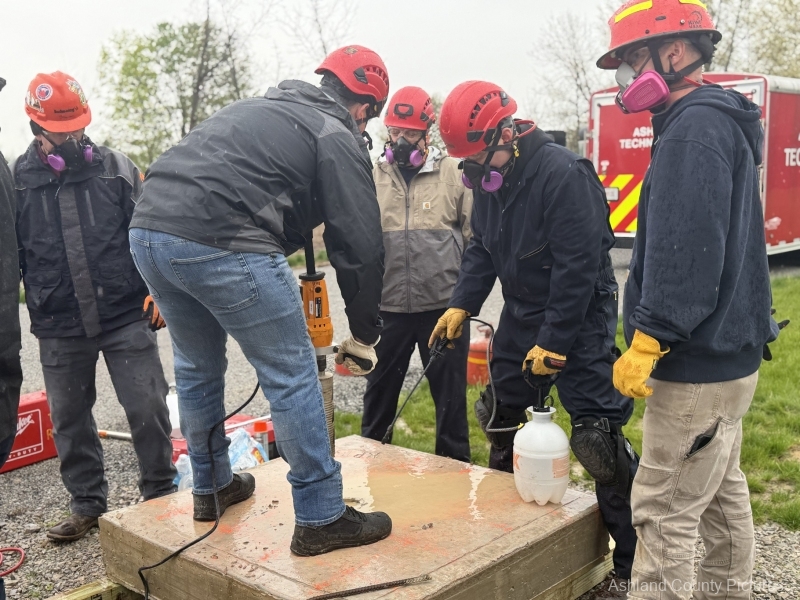
Nearby, firefighters worked on another cutting evolution called a clean lift, where crews practiced cutting concrete so a section could be lifted straight up and away from a potential victim underneath.
“The one over here is called a clean lift,” Tepley said. “We’re trying to clean lift up straight up.”
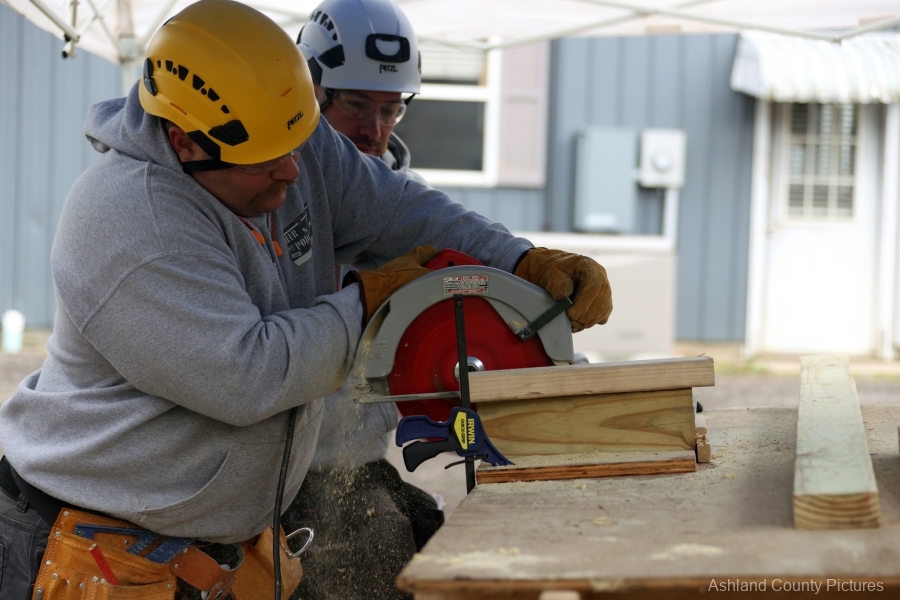
Tepley said the depth of the concrete created another challenge. The concrete was thicker than the saw blade could cut in one pass, forcing firefighters to first cut a trough so the saw could sit deeper and make the final cut.
“The saw blade can cut down about five, five and a half inches, and it’s about an eight-inch piece of concrete,” Tepley said. “So you have to make a trough for the saw to sit in to make that final cut.”
Again, the careful process centered on the possibility of a victim being trapped below.
“If there was no victim, we would just take a jackhammer and break right through the concrete,” Tepley said.
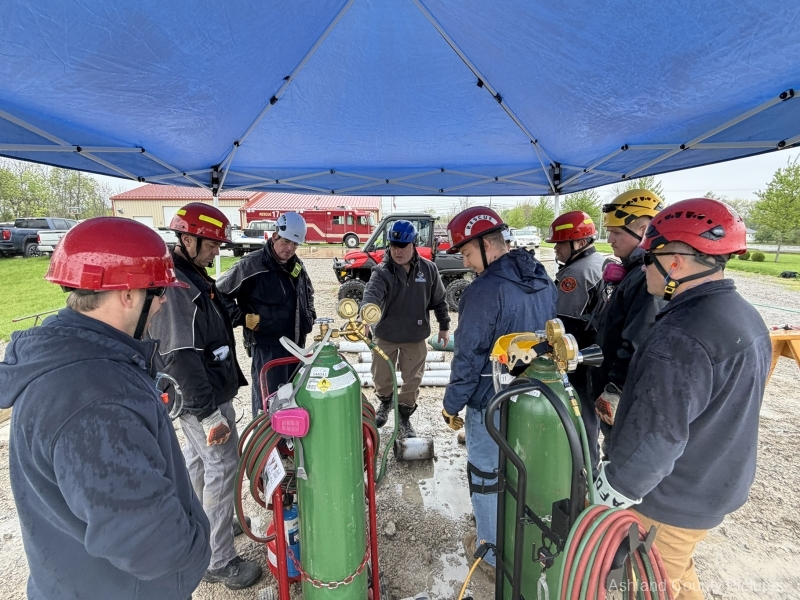
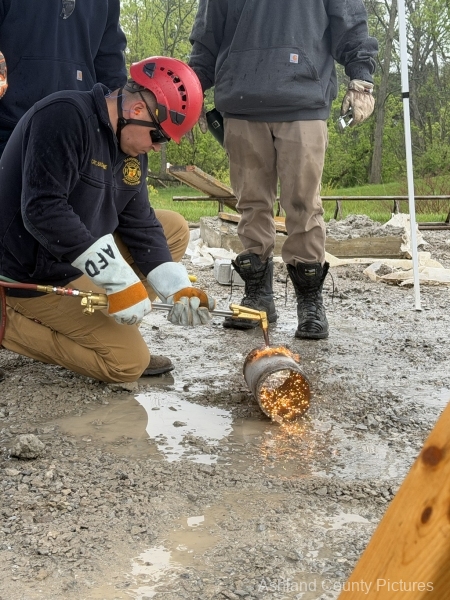
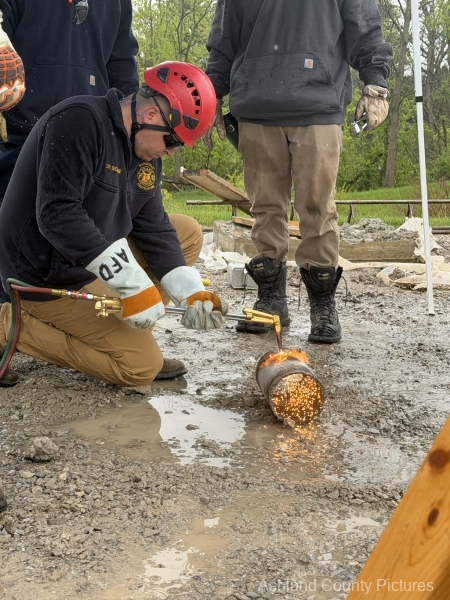
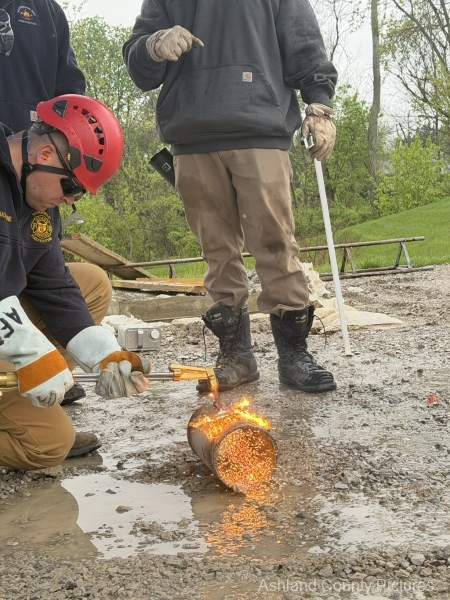
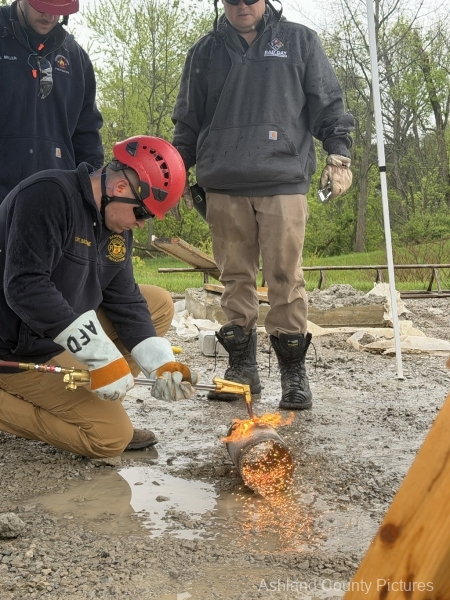
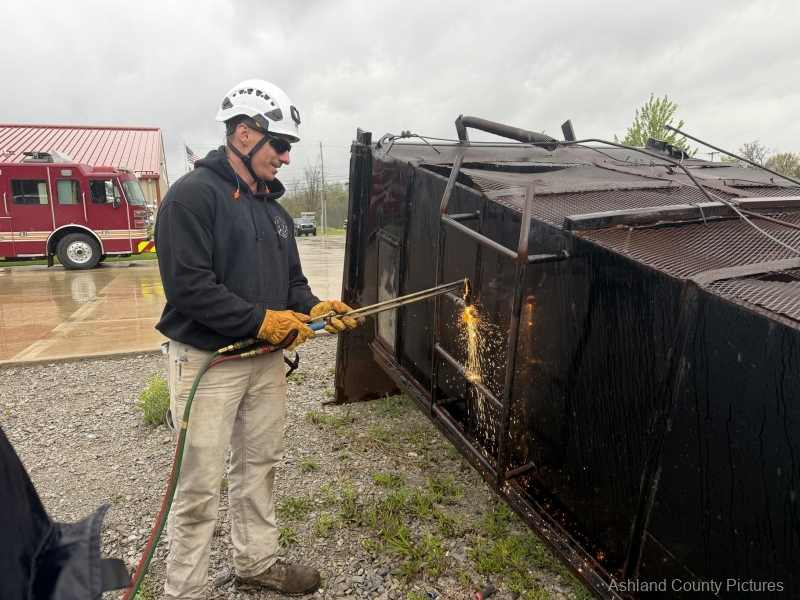
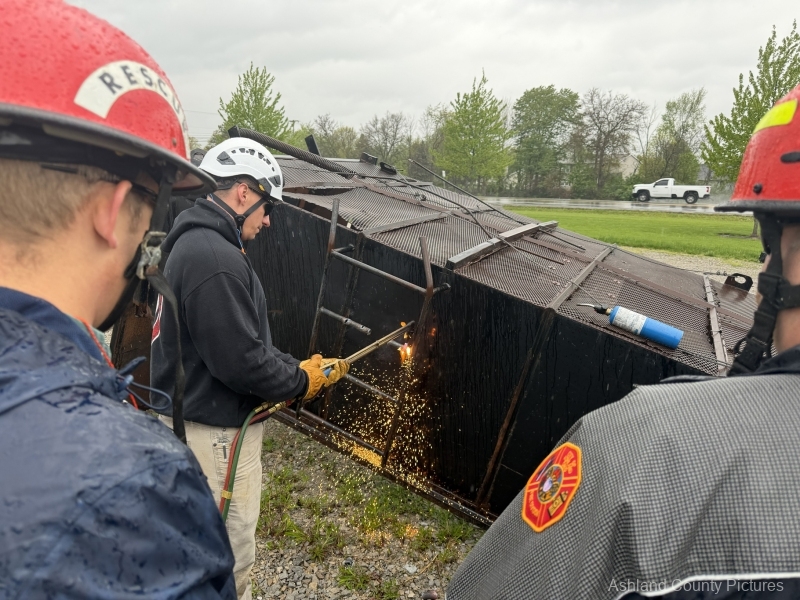
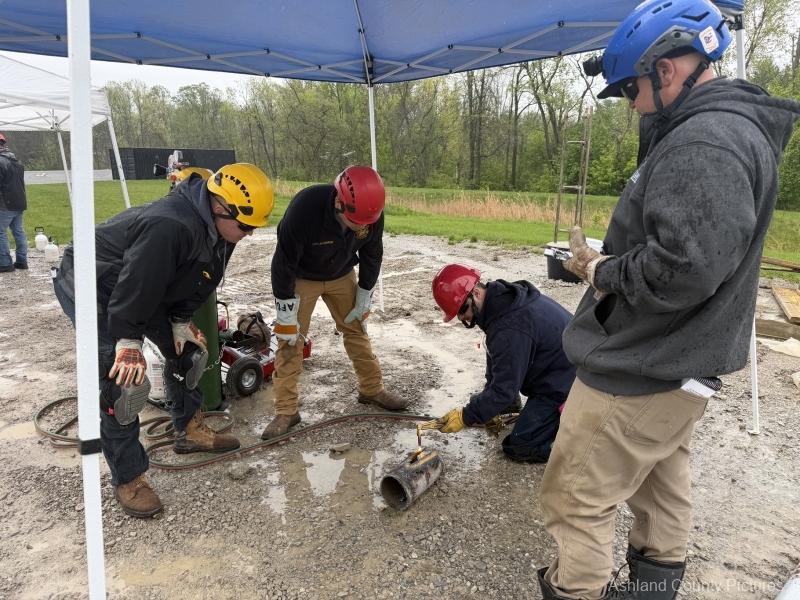
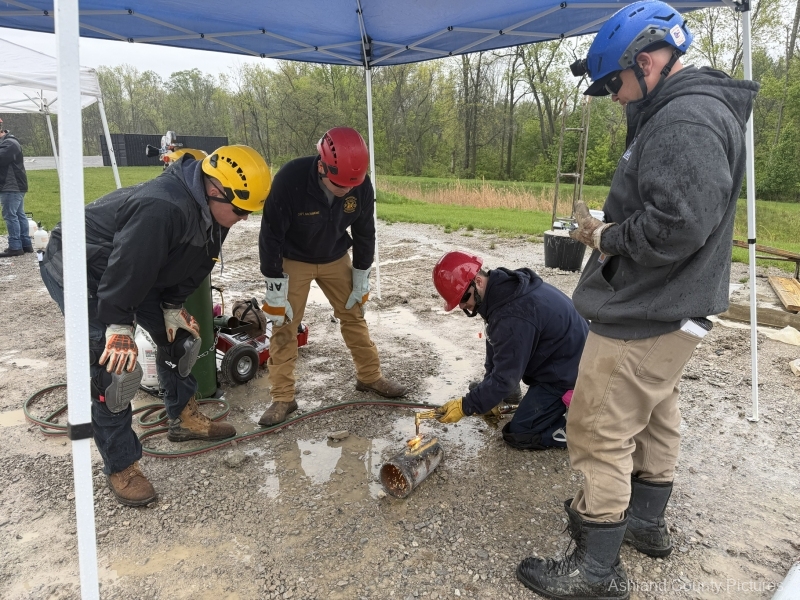
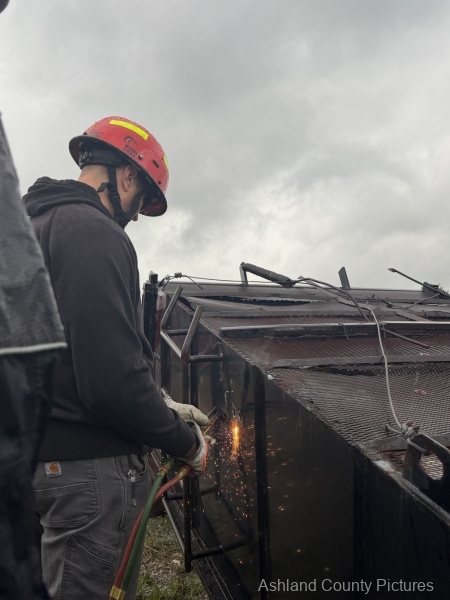
Firefighters also practiced using propane and gas torches to cut metal. While that station was not directly simulating a victim beneath the material, Tepley said the skill is critical in collapse environments where steel beams or large pieces of metal may need to be cut into manageable sections.
“Say there’s an I-beam that you need to lift out of there,” Tepley said. “We can’t take a 30-, 40-foot piece of I-beam out. You’ve got to cut it into pieces so a crane can come in and then lift that I-beam out and away.”
Throughout the week, firefighters worked side-by-side, measuring, cutting, bracing and problem-solving through complex rescue conditions. The training pushed them to think beyond the normal fireground response and prepare for disasters where buildings may be unstable, victims may be trapped and seconds may matter.
For Ashland firefighters, the week was more than another required class. It was a reminder of the danger they are willing to face and the importance of being ready before disaster strikes.
The friendly banter may have ruled the day, but the mission was serious: train hard now, so when the bad day comes, they are ready.