
Four Men, One Basement Battlefield, and Absolutely No Mercy
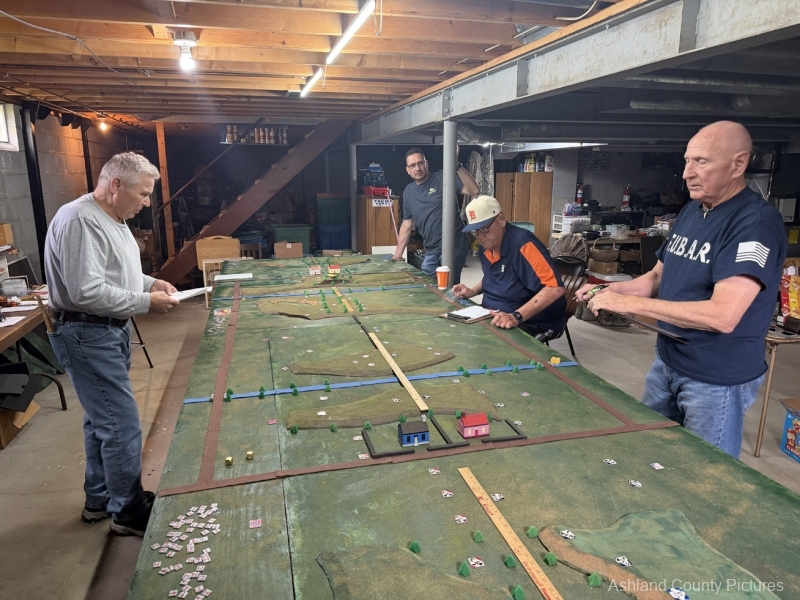
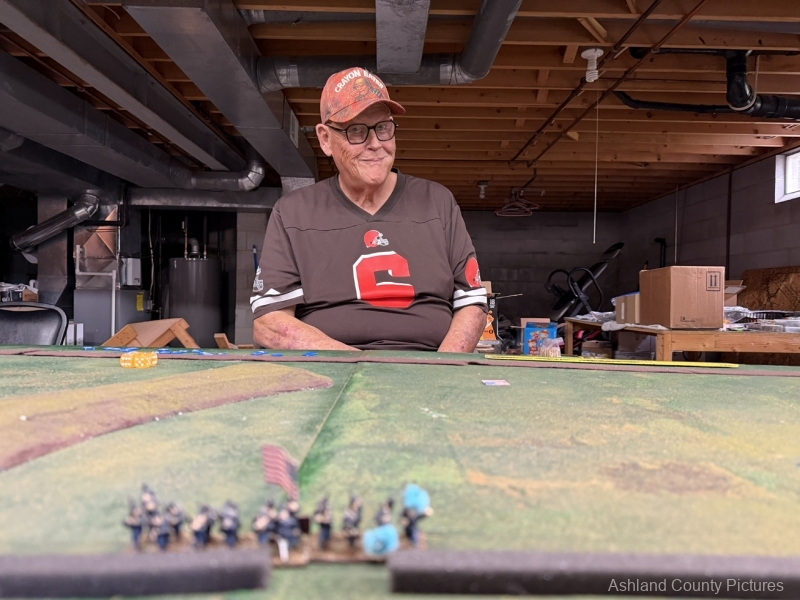
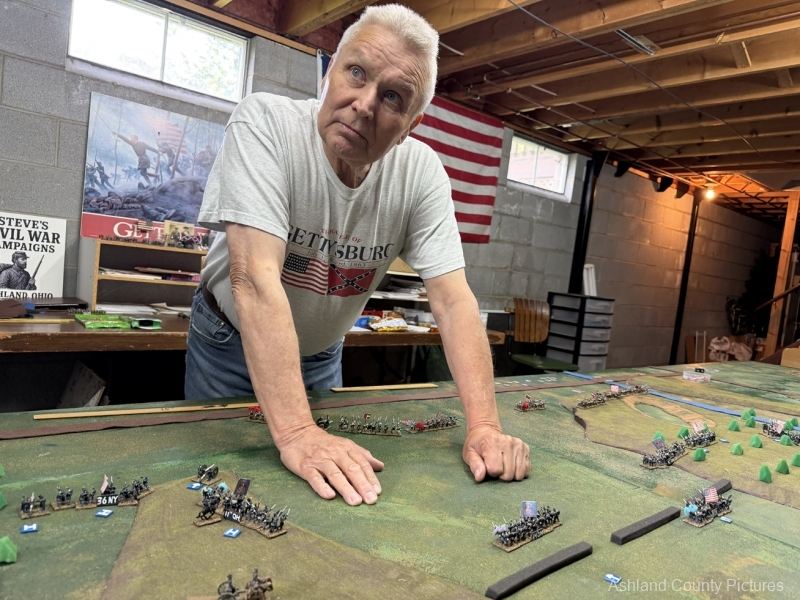
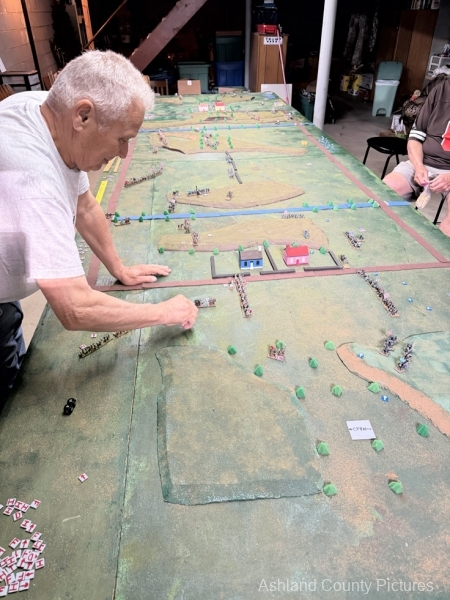
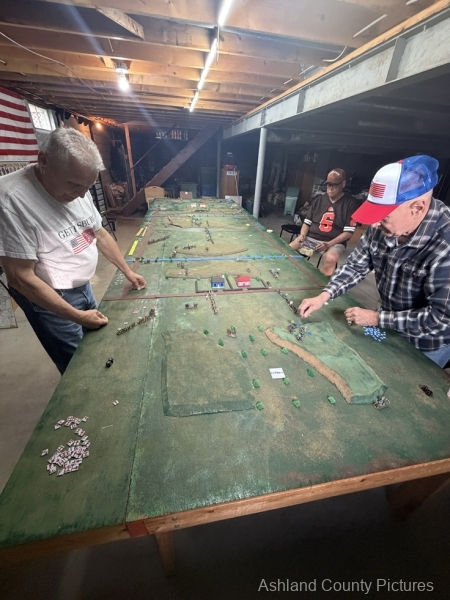
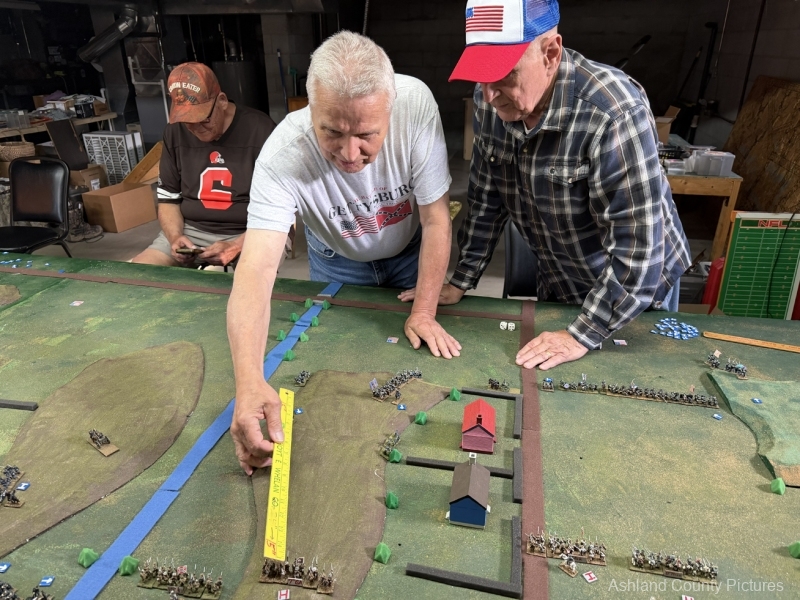
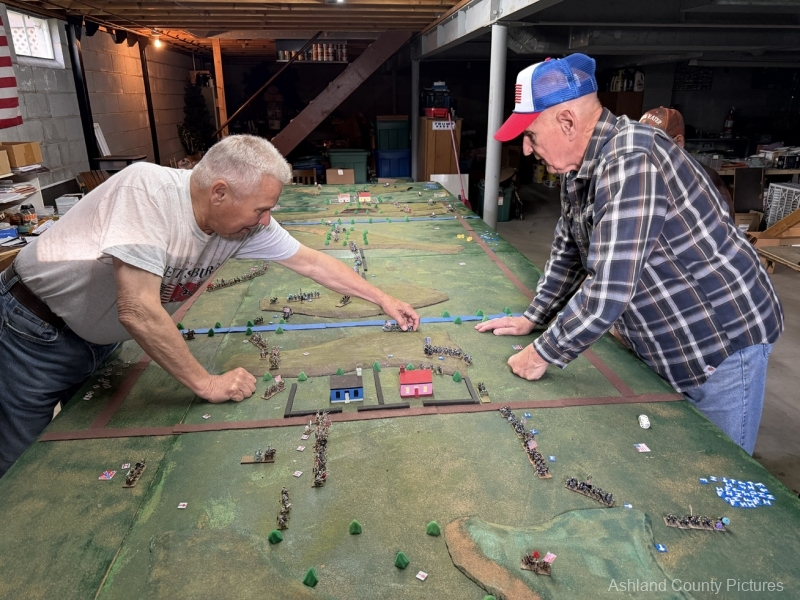
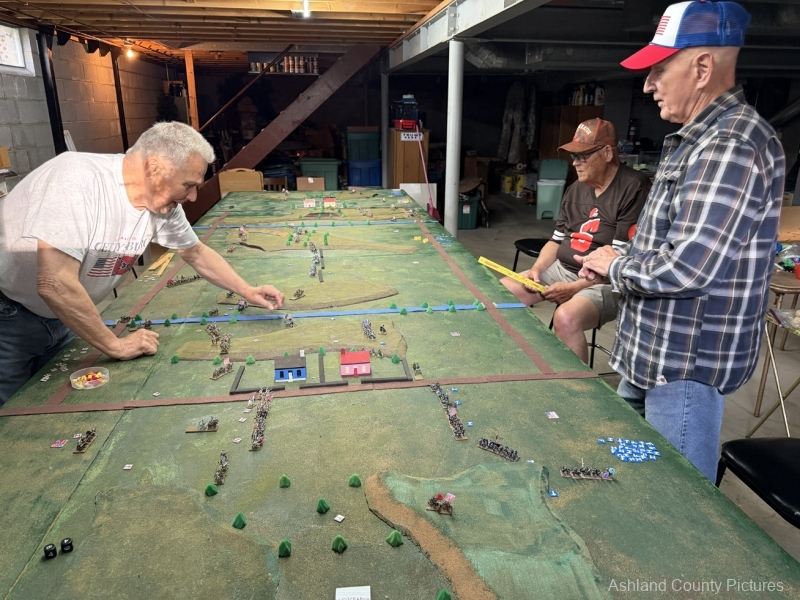
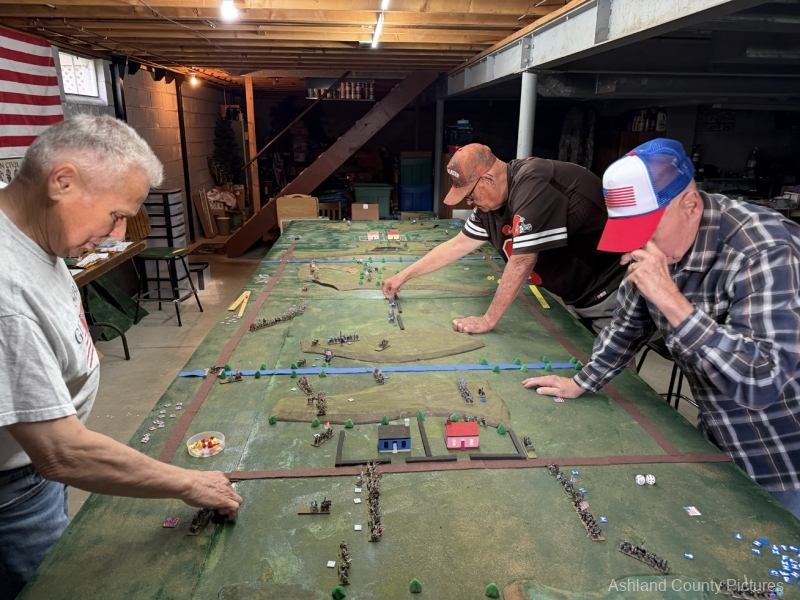
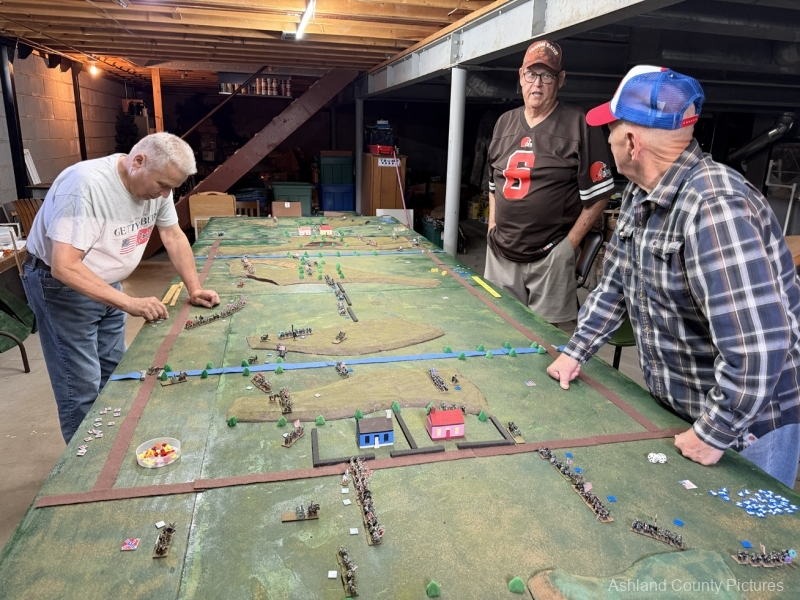
ASHLAND COUNTY — Every Monday night from 5 to 8 p.m., while most people are easing into the week, four men gather around a 16-foot-long battlefield to settle matters of strategy, pride, and good old-fashioned trash talk.
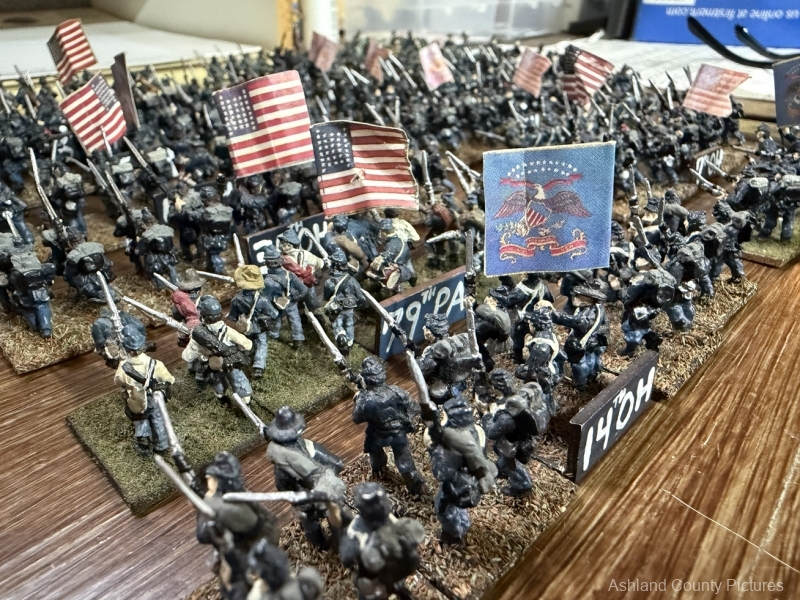
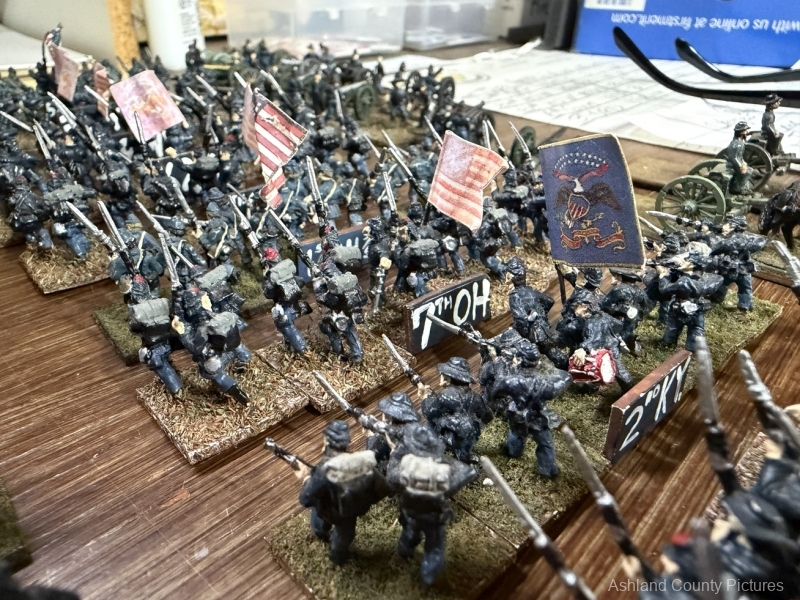
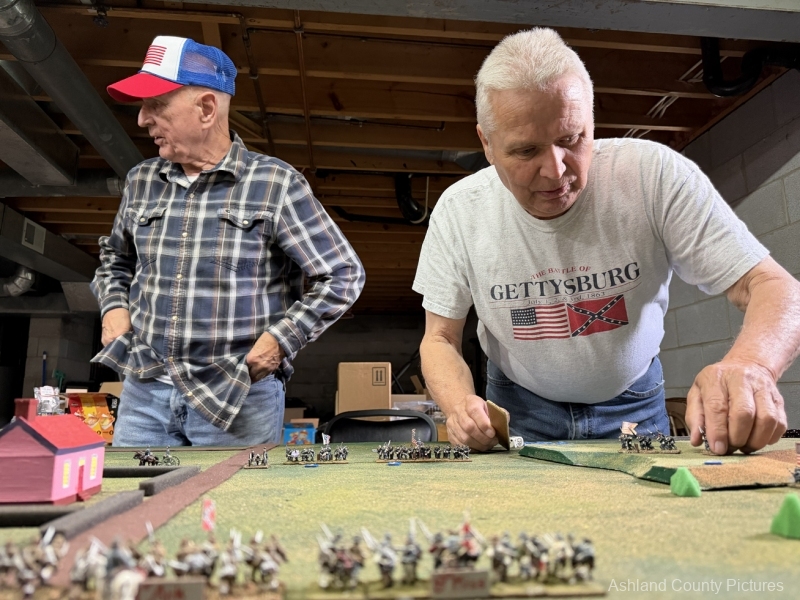
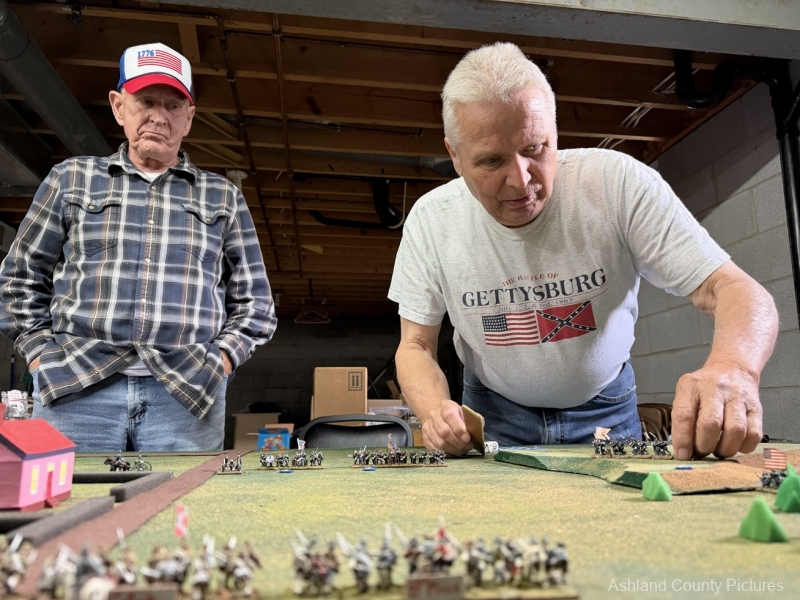
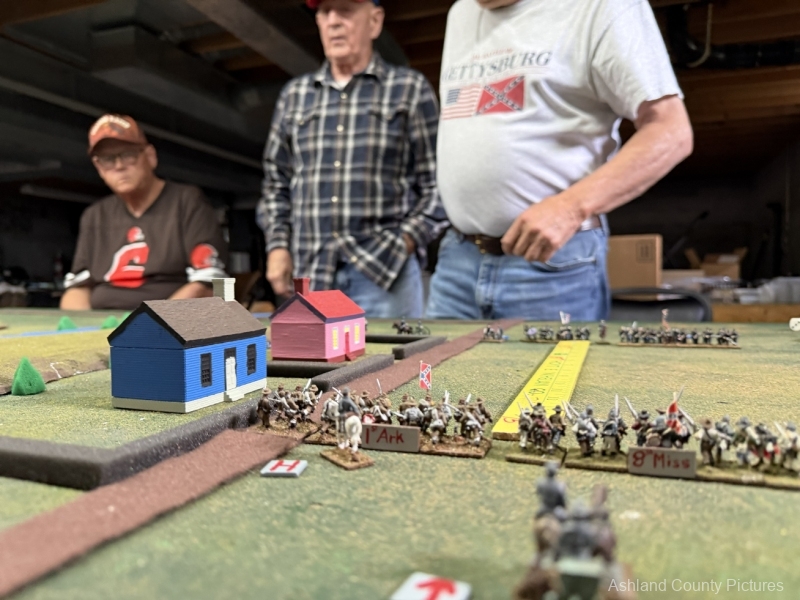
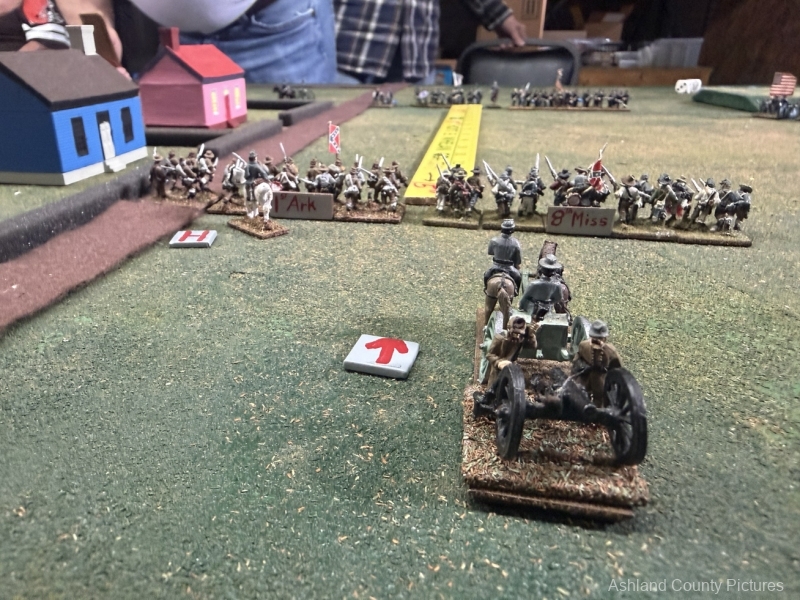
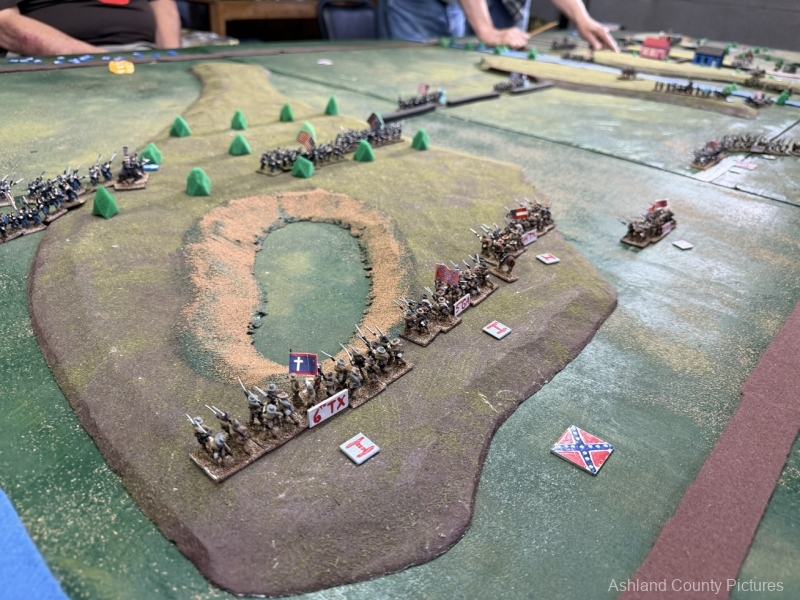
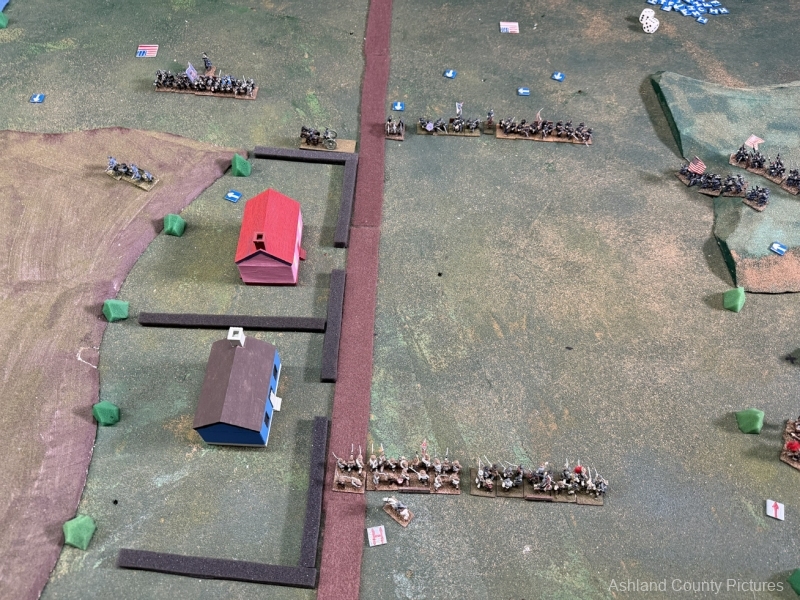
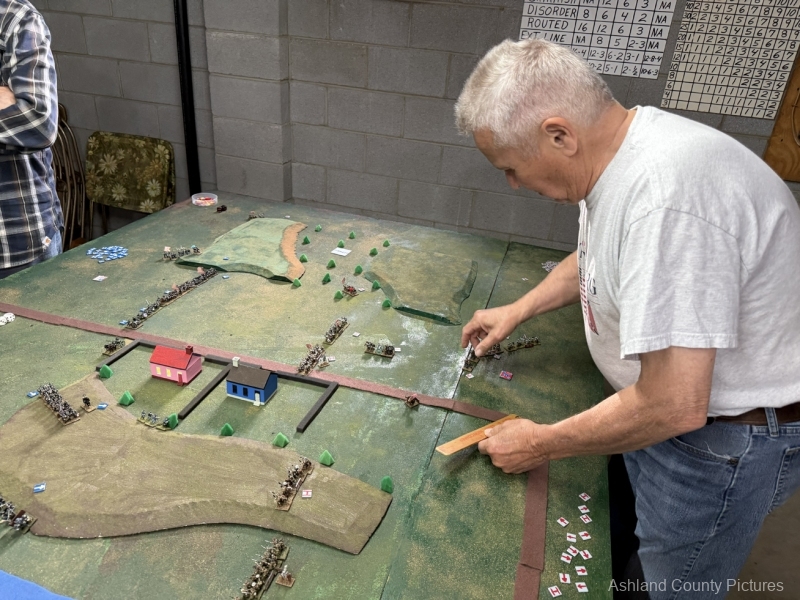
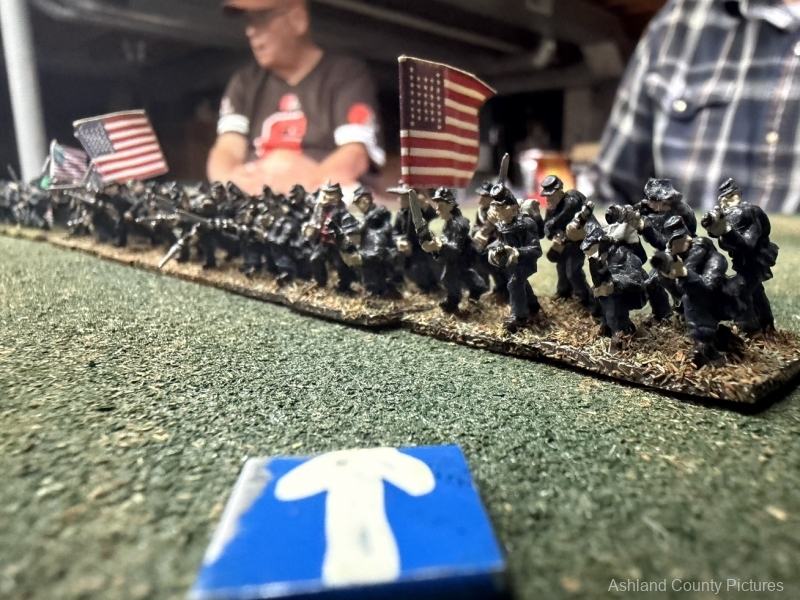
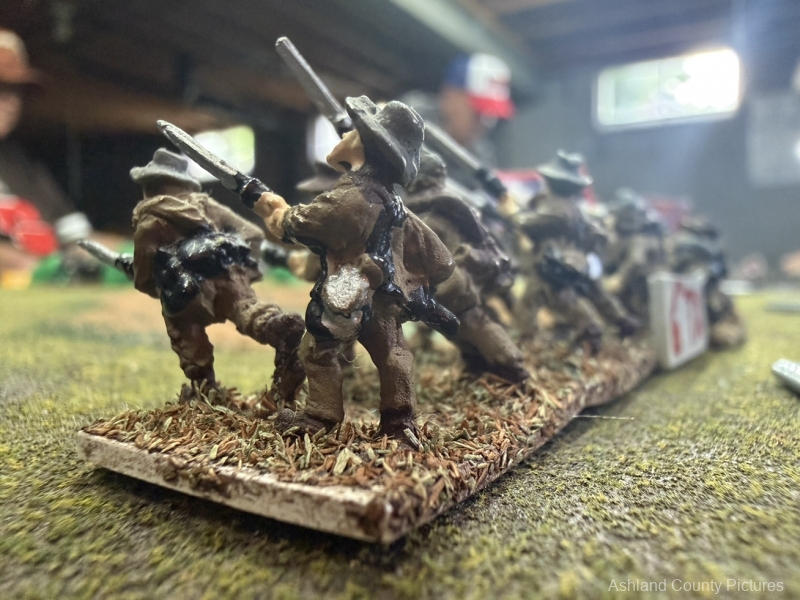
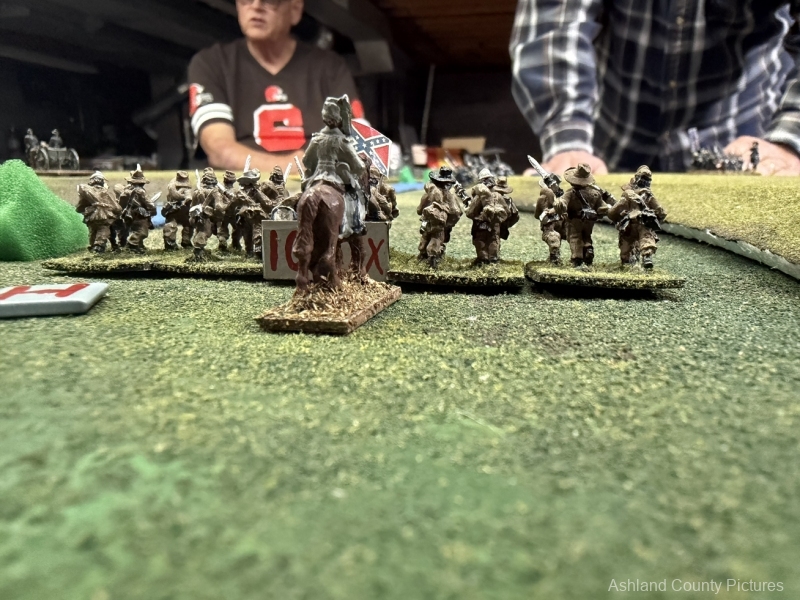
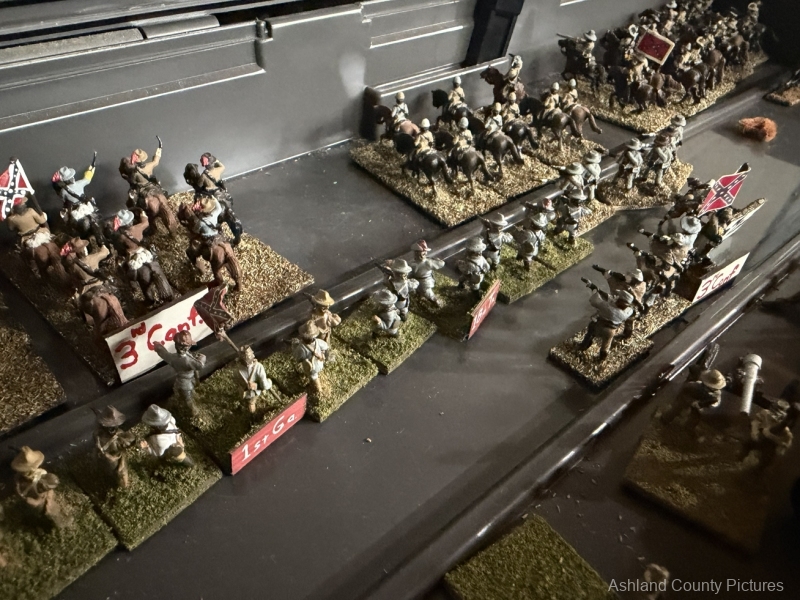
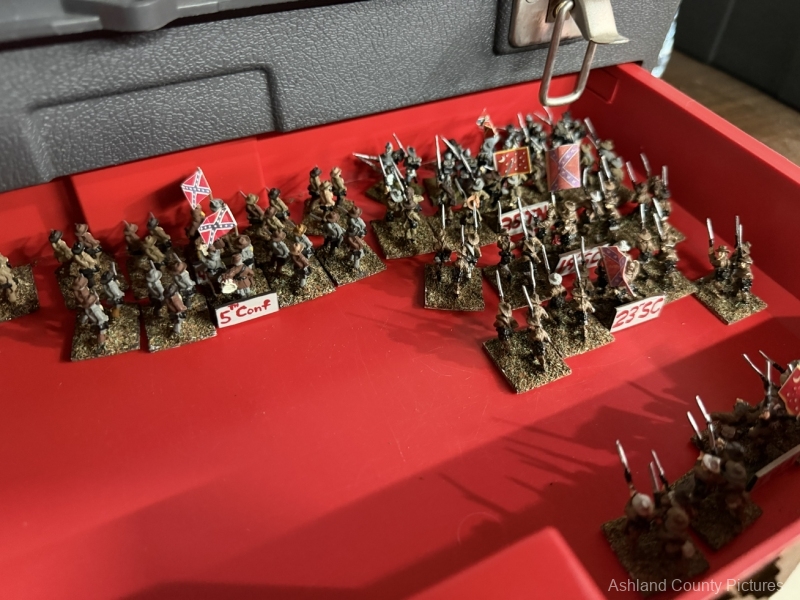
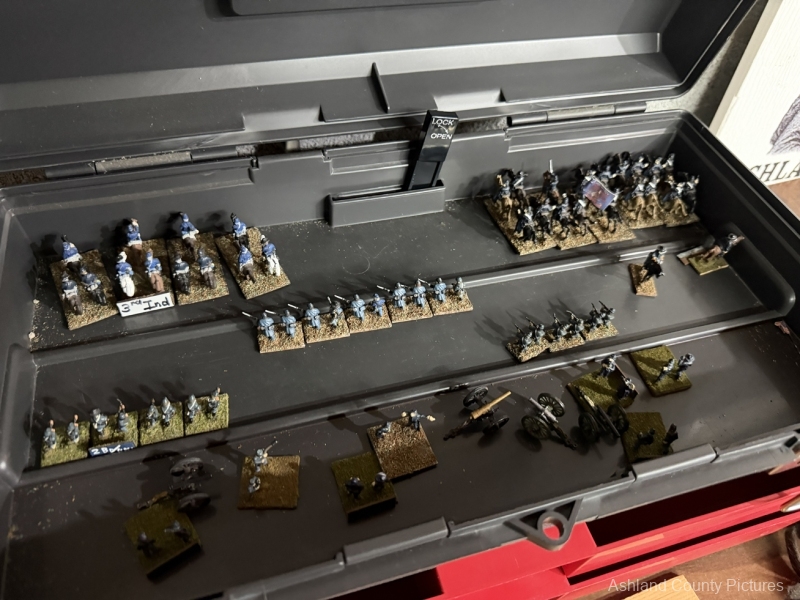
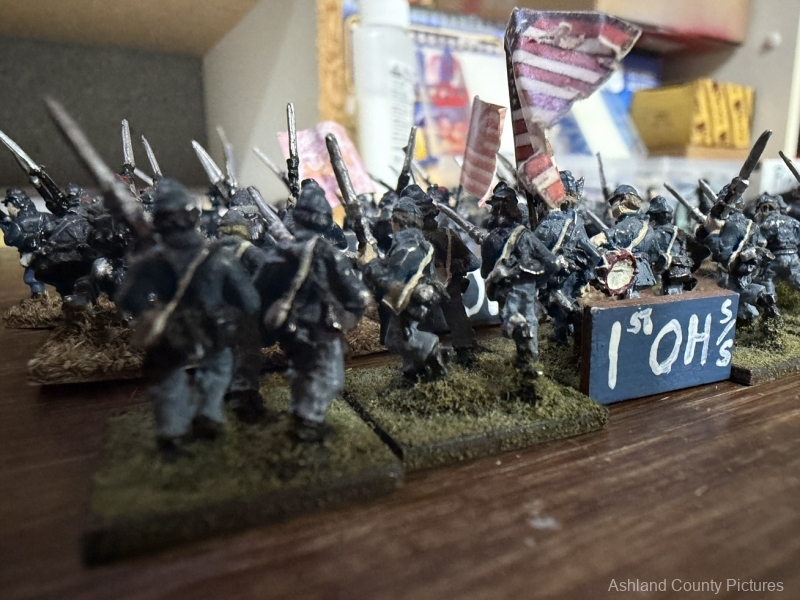
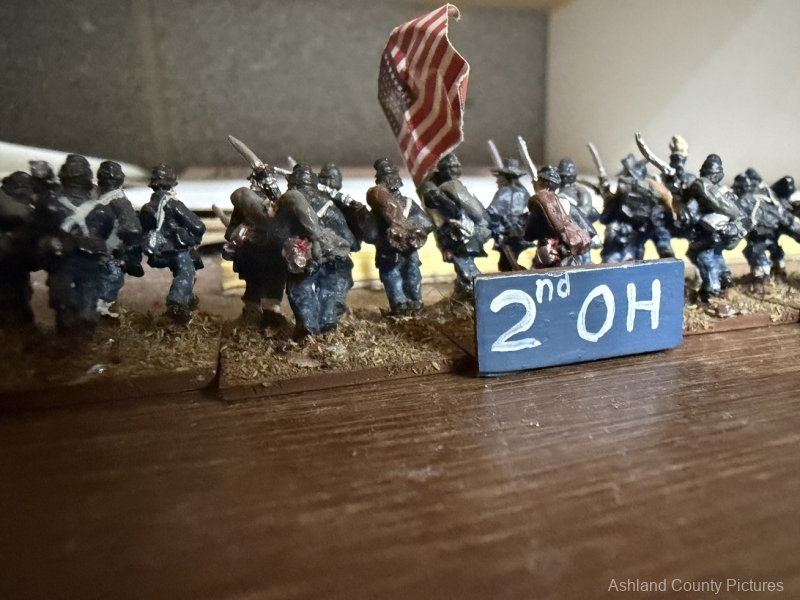
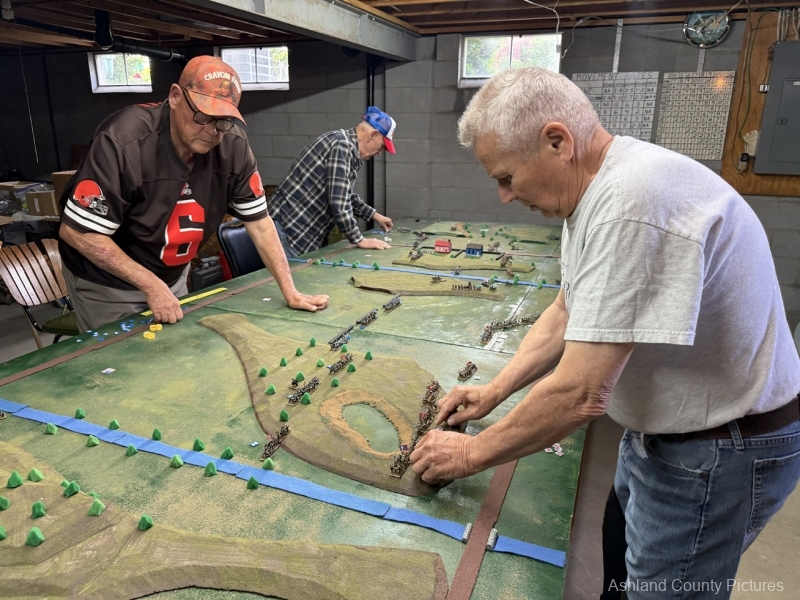
The game is called Johnny Reb, a miniature Civil War tabletop game where Confederate and Union regiments clash across rivers, roads, hills, woods, fences and tiny 3D-printed houses. The soldiers may only stand about 15 millimeters tall, but make no mistake: the egos, tactics and verbal artillery are full-sized.
Steve Patterson, who has been playing since the 1980s, said each figure represents roughly 20 men, with the action played at the level of the base rather than the individual soldier. In other words, that little clump of painted troops on the table could represent an entire regiment marching confidently into history, or directly into disaster.
Johnny Reb is a regimental-level American Civil War miniatures wargame first published in the 1980s. The later Johnny Reb III rules describe the game as “Grand Regimental tactics” for Civil War miniature gaming, using figures from 10mm to 25mm, with 15mm being one of the common scales. Players supply, paint and organize their own armies.
For Patterson and the group, this is not a quick board game you pull out after dinner. A single battle can take four or five weeks and sometimes even months depending on how badly one side gets mauled or how long everyone refuses to admit they are losing.
The Monday night generals include Steve Patterson, Ken Hammontree, Kenny Ferguson and Ryan Chambers. Together, they meet to determine the outcome of Civil War scenarios that never happened exactly this way, but certainly feel real enough once the dice start rolling and someone’s carefully planned attack gets shredded by cannon fire.
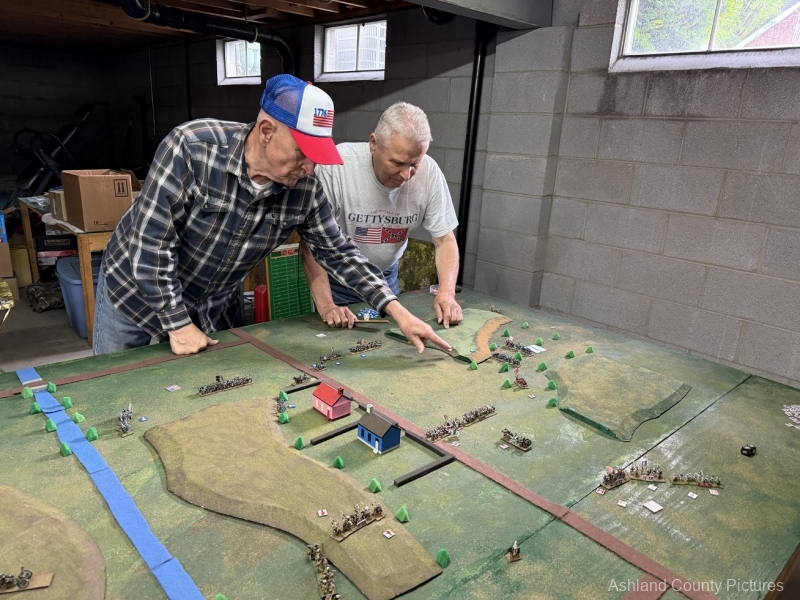
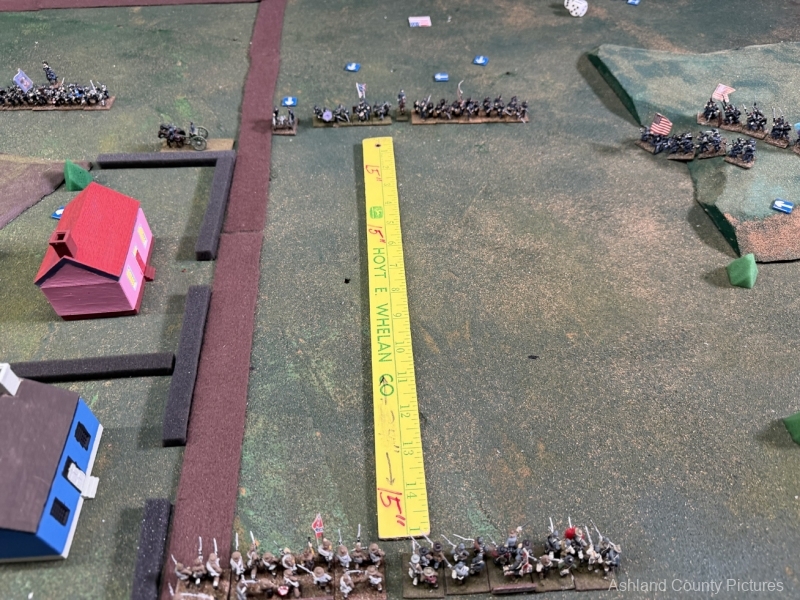
The battlefield itself is no small operation. Patterson said the table stretches about 16 feet by 5 feet, roughly the size of three ping-pong tables pushed together. He built much of the scenery himself, using felt for roads, blue insulation for hills, model train grass for terrain, and 3D-printed houses to bring the landscape to life.
And like any respectable battlefield, there is plenty of deception.
At the start of a game, units are hidden behind numbered markers. Until a player has line of sight, he does not know whether he is facing a full regiment, a weak unit, or what Patterson called a “ghost” a fake marker that may disappear once spotted.
That means a player can spend precious time maneuvering against what he thinks is a threat, only to discover he has been outsmarted by a blank marker and a man across the table trying not to laugh.
The strategy is part Risk, part chess, part history lesson, and part Army barracks banter. Orders are written down, revealed, and then the punishment begins. Units can move, fire, charge, fall back, hide in woods, take advantage of walls, or attempt the boldest maneuver of all: walking across open ground while everyone else waits with loaded dice and zero sympathy.
“The hardest part now is who’s going to come out and get shot at,” Patterson joked during the game.
The banter is relentless. Nobody gets mercy, and nobody seems to expect any.
If a regiment gets too weak, morale becomes a problem. If morale fails, the unit can become shaken. Once that happens, the opposing side may smell blood and charge in to finish the job. In tabletop terms, that means losing soldiers. In Monday-night terms, it means hearing about it from the other three men for the foreseeable future.
Patterson’s love for Civil War history goes well beyond the game table. He said he has been interested in the Civil War since childhood and had a great-great-grandfather, Henry Barr, who served with the 82nd Ohio. Patterson said Barr was discharged after Second Manassas, before Gettysburg a fact Patterson noted may have had something to do with why he is here today.
The current battlefield includes regiments tied to Chickamauga, with Patterson using historical listings to build out the units. Some of the regiments also had connections to Gettysburg, adding another layer of history to the miniature chaos.
The game is complicated, but that is part of the appeal. Movement changes depending on whether troops are on roads, open ground, woods or in formation. Units behind trees may get saves because some shots hit timber instead of soldiers. Cannons, cavalry, infantry, officers, morale, terrain and timing all matter.
Or, as every tabletop general eventually learns: the perfect plan can still die horribly with a bad dice roll.
Patterson said the best part is learning Civil War history while playing it without the wool uniforms, summer heat or actual battlefield danger.
“You’re learning and playing Civil War at the same time,” he said. “The best part is I don’t have to put a uniform on and go be a rebel. I can just do it in the basement.”
For these four men, Monday night is not just game night. It is history, strategy, craftsmanship, friendship and friendly fire, mostly verbal, all rolled into one.
And on this battlefield, the soldiers may be tiny, but the grudges are life-sized.